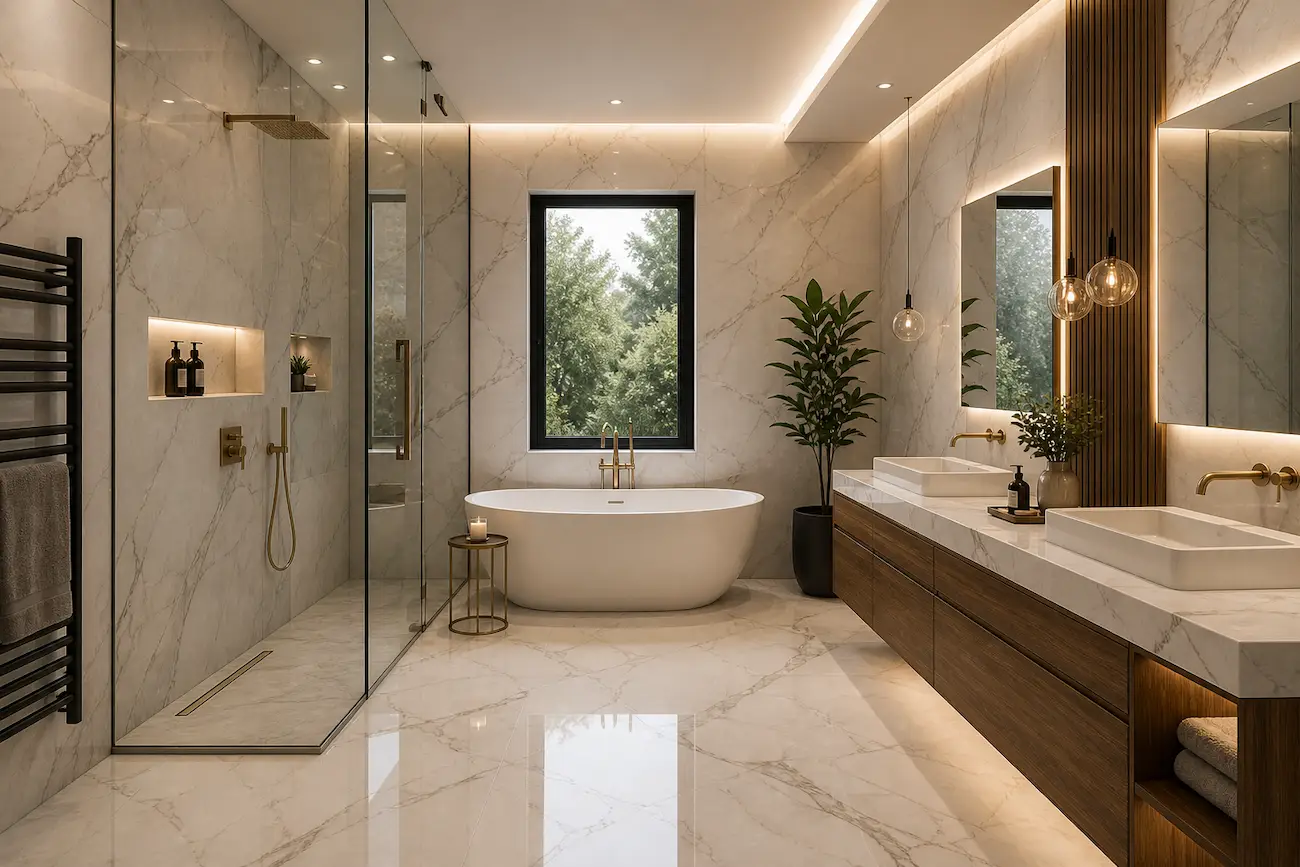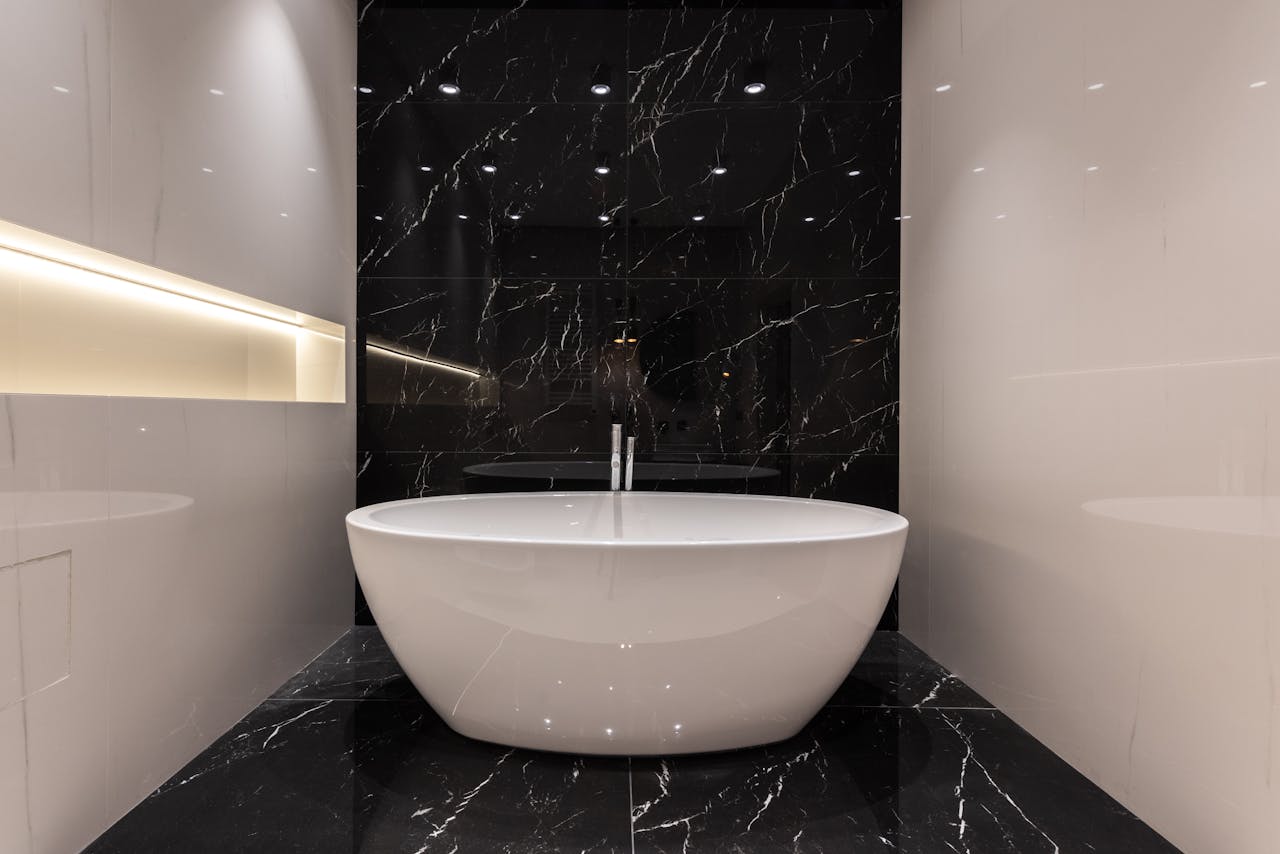
Most bathrooms don’t fail because they’re broken. They fail because they feel outdated. And that’s a very different problem — one that doesn’t always require demolition.
If you’ve ever researched a bathroom renovation in Richmond Hill , you’ve likely seen how quickly a simple idea turns into a full-scale construction plan. Move one drain, and suddenly you’re talking permits, inspections, and unexpected plumbing complications. Replace tile, and now you’re dealing with dust containment, disposal fees, subcontractor scheduling, and multi-week timelines. What started as a cosmetic refresh quietly evolves into a disruptive construction project that impacts your daily routine.
But here’s what many homeowners overlook: most bathrooms are structurally sound. The layout functions efficiently. The plumbing works. The waterproofing is intact. The shower doesn’t leak. The issue isn’t failure — it’s fatigue. The finishes feel tired. The lighting feels flat. The hardware feels lightweight. The grout lines look older than they are.
The $500 Bathroom Pivot focuses on solving the visual and tactile problems — not rebuilding what already works. It’s about identifying what the eye notices first and what the hand interacts with daily, then upgrading those elements strategically.
Instead of demolition, we use refinement. Instead of chaos, we use precision. The result is a bathroom that feels modern, cohesive, and intentional — without touching the bones of the space.
What Is a Bathroom Pivot?
A Bathroom Pivot is a strategic cosmetic transformation designed to modernize your space without structural alteration. You’re not relocating plumbing. You’re not opening drywall. You’re not modifying waterproofing systems. Instead, you’re refining the visible and tactile layers of the room — the parts that shape perception.
Change the perception, not the plumbing.
In many Richmond Hill homes, the difference between “builder-grade” and “boutique hotel” is cohesion.
Why Some Bathrooms Feel Expensive

Luxury isn’t defined by price alone. It’s defined by sensory cues. A bathroom can contain high end materials and still feel ordinary if those cues are missing. At the same time, a modest space can feel refined and elevated when the right visual and tactile signals are present.
Expensive bathrooms feel intentional. Nothing looks accidental. The finishes relate to one another. The metal tones are coordinated. The lighting temperature is consistent. The color palette is controlled. When everything feels connected, the brain interprets that cohesion as quality.
One of the strongest signals of luxury is weight. Heavy drawer pulls, solid faucets, and sturdy shower handles communicate durability. When something feels substantial in your hand, it creates confidence. Lightweight, hollow hardware does the opposite. Even if the difference in cost is small, the difference in perception is significant.
Another powerful cue is contrast. High end bathrooms often balance light and dark elements carefully. A darker vanity against light tile creates depth. Matte finishes next to polished surfaces create texture. Flat, monotone spaces tend to feel basic, while thoughtful contrast adds dimension and sophistication.
Lighting may be the most underestimated factor. Cool, harsh lighting flattens everything and exaggerates imperfections. Warm, balanced lighting softens shadows and enhances materials. Expensive bathrooms rarely rely on a single overhead fixture. They use layered lighting that makes the space feel calm and flattering.
Clean lines and precision also matter. Straight caulk lines, crisp grout, aligned hardware, and even spacing between elements signal craftsmanship. The human eye notices symmetry and order immediately, even if we are not consciously aware of it.
Luxury also communicates through restraint. Clutter reduces perceived value. Too many colors, too many finishes, or too many visible products make a space feel busy. High end bathrooms often feel simple, but that simplicity is deliberate. They remove what does not belong.
Finally, texture plays a quiet but important role. Smooth stone, matte cabinetry, soft cotton towels, and brushed metal finishes create layers of tactile interest. When multiple textures coexist in harmony, the room feels curated rather than assembled.
In the end, expensive is not just about marble slabs or heated floors. It is about cohesion, proportion, lighting, and material balance. When those fundamentals align, a bathroom feels designed. And when a bathroom feels designed, it feels expensive.
- Heavy hardware feels premium.
- Clean grout lines signal care.
- Warm lighting flatters skin tones.
- Minimal clutter communicates intention.
Phase 1: The Visual Anchor
The vanity is usually the anchor. It is the first element your eye lands on when you enter the bathroom, and it quietly determines how modern, refined, or outdated the entire space feels. Even if the tile is intact and the plumbing functions perfectly, a dated vanity can make the whole room feel older than it actually is.
That is why Phase 1 creates such a powerful shift. When the visual anchor is elevated, everything around it feels elevated.
Refinish, Don’t Replace
Replacing a vanity often triggers a chain reaction. Once it is removed, plumbing connections may need adjustment. The countertop might require replacement. Flooring edges may become exposed. Walls often need patching and repainting. What starts as a simple refresh can quickly turn into a complicated renovation.
Refinishing avoids that cascade of work.
Instead of removing the existing cabinet, you transform it. With proper preparation, priming, and cabinet grade coating, an older vanity can look custom built and contemporary. The key is careful surface preparation. Cleaning away grease and residue ensures proper adhesion. Light sanding or deglossing helps the new finish bond securely. A high quality primer prevents bleed through and improves durability. When each layer is applied with patience and allowed to cure fully, the result can closely resemble a factory finish.
Refinishing works especially well when the cabinet structure is solid. If the layout already functions and the box is in good condition, appearance is usually the only issue that needs attention.
Modern tones that elevate instantly
- Matte Charcoal creates depth and contrast. It pairs beautifully with white countertops and bright tile, giving the space a sharp and contemporary feel.
- Deep Navy introduces sophistication without feeling harsh. It works well in bathrooms with good natural or artificial light and adds richness without overwhelming the room.
- Soft Black delivers bold elegance. In a matte finish, it feels modern and architectural rather than heavy. When paired with coordinated hardware and warm lighting, it can create a boutique hotel aesthetic.
- Muted Sage offers a softer, spa inspired look. It brings subtle color while maintaining calm neutrality. This tone works particularly well in smaller bathrooms where you want character without visual heaviness.
Upgrade Hardware Weight
Hardware is often overlooked, yet it strongly influences perceived quality. Thin, lightweight handles tend to signal builder grade installation. Heavier, solid pulls immediately communicate durability and refinement.
Choose hardware with substance. Slightly oversized pulls feel intentional and modern. The tactile experience matters just as much as appearance because these pieces are touched daily.
Maintain consistency in metal finishes throughout the bathroom. If the faucet is brushed nickel, keep drawer pulls in the same family. If the faucet is matte black, repeat that finish in towel bars and hooks. Cohesion creates calm.
Upgrading hardware is one of the most cost effective ways to elevate a bathroom’s overall aesthetic. The difference is immediate and highly visible.
Estimated Cost: Under 120 Dollars
Phase 2: Surfaces Without Demolition
One of the biggest cost drivers in a traditional bathroom renovation in Richmond Hill is demolition. Removing tile creates dust, noise, disposal fees, and often uncovers unexpected issues underneath. Phase 2 focuses on upgrading visible surfaces without opening floors or walls. The goal is simple: achieve a clean, modern finish while avoiding structural disruption.
Most bathrooms do not need new subfloors or complete tile replacement. What they need is visual clarity. Outdated surfaces often look worse than they actually are. With the right approach, you can reset the aesthetic of the room in a single weekend.
SPC Flooring
SPC flooring, which stands for Stone Plastic Composite, is one of the most practical upgrades for bathrooms. It is waterproof, dimensionally stable, and designed to float over existing stable tile. That means no demolition, no dust clouds, and no removal crews.
Modern SPC products replicate natural stone, concrete, or wood tones with impressive realism. Wide plank formats can visually expand a small bathroom, while soft neutral tones help brighten darker spaces. Because SPC is rigid core, it hides minor imperfections in the existing tile below and creates a uniform surface instantly.
Beyond aesthetics, SPC flooring improves comfort underfoot and often reduces sound. Installation is typically fast, making it ideal for a Pivot approach where efficiency matters. When homeowners search for affordable bathroom renovation solutions, SPC is often one of the highest impact upgrades per dollar spent.
Grout Revival
Grout has a surprisingly powerful effect on how clean and modern a bathroom feels. Even if the tile itself is in good condition, darkened or stained grout lines can make the entire floor or shower appear aged.
Grout revival is one of the most underrated upgrades in cosmetic bathroom transformation. Using a grout pen or grout refresh product can dramatically sharpen tile lines in under an hour. Brightening grout makes tiles look newer, more intentional, and professionally installed.
Color consistency is key. Matching grout tone to the tile creates calm continuity. Slight contrast can define pattern intentionally. The goal is clarity. When grout lines look crisp, the entire bathroom feels better maintained and more valuable.
Fresh Caulk Lines
Old caulk is one of the fastest ways to date a bathroom. Over time it can yellow, crack, shrink, or collect mildew. Even a well maintained space can look neglected if transition lines around tubs and sinks are uneven or discolored.
Removing old caulk and applying fresh, clean lines instantly upgrades the room. Crisp transitions around the bathtub, vanity backsplash, and shower edges communicate precision and care. This small detail has a disproportionate impact on perceived quality.
Professional looking caulk lines require patience. Clean removal, proper surface drying, and smooth application create that finished look associated with higher end bathroom renovation projects. It is a low cost improvement that significantly enhances visual polish.
Estimated Cost: $150–$200
Phase 3: Fixtures & Lighting
Fixtures define the era of a bathroom more than almost any other element. You can keep the same vanity, tile, and layout — but once the faucet, shower trim, and accessories are updated, the entire room shifts visually into a new decade. In many bathroom renovation projects in Richmond Hill, fixture upgrades alone create a dramatic before-and-after impact.
Metal finish selection is critical. Mixing random finishes creates visual noise. Coordinated finishes create cohesion.
- Matte Black – High contrast, architectural, and bold. Works especially well against white tile or light walls.
- Brushed Gold – Adds warmth and softness, ideal for neutral or warm-toned bathrooms.
- Champagne Bronze – A subtle luxury finish that avoids the flashiness of polished gold.
- Brushed Nickel – Timeless and forgiving, excellent for transitional spaces.
When upgrading bathroom fixtures, prioritize these elements:
- Faucet – The most touched fixture in the room.
- Shower head – Improves both aesthetics and daily experience.
- Towel bars and robe hooks – Small but visually repetitive elements.
- Toilet paper holder – Often overlooked but highly visible.
Consistency across these pieces creates intentional design. Even affordable fixtures can look high-end when unified.
Lighting is where transformation multiplies. Most builder bathrooms rely on a single overhead light and a basic vanity strip. That creates shadows, uneven brightness, and a flat feeling.
Instead, aim for layered lighting:
1. Ambient Lighting
The main overhead light should provide soft, even illumination. Swap cool white bulbs for warm white (2700K–3000K) to instantly soften the space.
2. Task Lighting
Vanity lighting should illuminate the face evenly from both sides. Plug-in sconces on each side of the mirror create hotel-style lighting without opening drywall.
3. Accent Lighting
Small LED under-vanity strips or subtle backlit mirrors create depth and elevate the room dramatically at night.
Color temperature matters more than fixture price. Warm lighting flatters skin tones and reduces harsh shadows. This single adjustment often makes a bathroom feel 30% more luxurious instantly.
Texture also plays a role. Matte finishes absorb light, while polished finishes reflect it. Combining the two strategically creates depth and interest.
Estimated Cost: $100–$150
Phase 4: The Final 10%
The final 10% determines whether the bathroom feels “updated” or fully “designed.” This stage isn’t about construction — it’s about editing, balance, and styling. In professional bathroom renovation projects, designers spend disproportionate attention on these finishing details because they influence perception more than structural upgrades.
- Curved hotel-style rod – A subtle architectural improvement that increases shower space visually and functionally.
- Framed mirror upgrade – Builder mirrors feel flat. Adding a frame or replacing with a structured mirror introduces depth.
- Neutral towel styling – White, sand, or soft grey towels create a spa-like atmosphere.
- Decluttered countertops – Remove excess bottles and visual noise.
Now go deeper.
Countertop Editing
Limit visible items to 3–5 essentials. Use matching dispensers for soap and lotion rather than branded plastic bottles. Group items in a small tray to create intentional composition.
Textural Balance
Introduce natural elements like woven baskets, a small wood stool, or a ceramic container. Bathrooms feel expensive when multiple textures coexist: smooth porcelain, matte metal, soft cotton, organic fiber.
Color Discipline
Stick to a controlled palette. If your vanity is dark, keep towels light. If metals are warm, avoid introducing cool chrome elements.
Scent & Experience
A subtle candle or diffuser adds a sensory layer. Boutique hotel bathrooms appeal to smell as much as sight.
Negative Space
Empty space is not wasted space. It communicates calm. Resist the urge to fill every wall and surface.
Small styling decisions often cost less than $50 but dramatically influence listing photos, resale perception, and everyday enjoyment.
Estimated Cost: ~$50
Pivot vs Traditional Remodel
| Feature | $500 Pivot | Full Remodel |
|---|---|---|
| Timeline | 48 Hours | 3–6 Weeks |
| Cost | ~$500 | $12,000+ |
| Disruption | Minimal | High |
The 48-Hour Execution Plan
Day 1
- Prep and refinish vanity
- Refresh grout and caulk
Day 2
- Install hardware and fixtures
- Add lighting and styling
Frequently Asked Questions
Does a “Bathroom Pivot” require a building permit in Richmond Hill?
Generally, no. In Richmond Hill, a permit is typically not required for cosmetic upgrades like replacing a vanity (in the same location), changing flooring, or updating fixtures. However, if your renovation involves moving drains, relocating plumbing lines, or structural wall changes, you must apply for a permit through the City of Richmond Hill e-Plan portal.
Will a $500 investment actually increase my home’s resale value?
Yes, but the value is in “perceived quality.” In the 2026 Richmond Hill real estate market, minor cosmetic refreshes (ROI of 70-80%) often outperform major upscale remodels (ROI of 50-60%). By removing “builder-grade” cues—like hollow hardware or dated lighting—you make the home move-in ready, which often triggers higher and faster offers.
How do I know if my bathroom is a candidate for a Pivot or needs a full renovation?
The Pivot is for “Fatigue,” not “Failure.” If your layout works and there are no signs of mold, water damage, or cracked shower bases, a Pivot is ideal. However, if you notice soft spots in the floor, “spongy” walls near the tub, or want to convert a tub to a walk-in shower, a professional bathroom renovation contractor is necessary to ensure the home’s structural integrity.
What is the best flooring for a no-demolition bathroom update?
SPC (Stone Plastic Composite) flooring is the gold standard for the Pivot. It is 100% waterproof and rigid enough to be installed directly over existing tile without the “bounce” of traditional vinyl. This avoids the dust and disposal fees of a traditional tile tear-out, which can save you over $1,000 in labor alone.
Can I refinish a builder-grade vanity myself?
You can, but the secret is in the coating. Standard latex paint will peel within months due to humidity. For a professional result that mimics a factory finish, use a cabinet-grade urethane alkyd enamel. This provides the durability needed for the high-moisture environment common in Richmond Hill en-suites.
How long does a $500 Bathroom Pivot take to complete?
The Pivot is designed for a 48-hour execution. Day one is for “wet” work—prepping and painting the vanity and refreshing grout. Day two is for “dry” work—installing hardware, fixtures, and final styling. This is a massive advantage over full remodels, which typically take 3–6 weeks.
Conclusion
Not every bathroom in Richmond Hill needs a sledgehammer to feel new. Often, the difference between a space that feels dated and one that feels like a boutique retreat isn’t found in the plumbing—it’s found in the precision of the details.
The $500 Bathroom Pivot is proof that smart upgrades can beat expensive chaos. By focusing on sensory cues like weight, light, and cohesion, you can reset the clock on your home’s aesthetic without the multi-week disruption of a traditional construction site. Whether you are prepping a property for the Richmond Hill real estate market or simply reclaiming your morning routine, starting with a strategic “Pivot” ensures that every dollar spent is an investment in perceived value.
However, when the “fatigue” of your space goes deeper than the surface—or when you’re ready to fully re-imagine the footprint of your home—the right partnership makes all the difference.
Ready to build the bathroom you’ve always wanted?
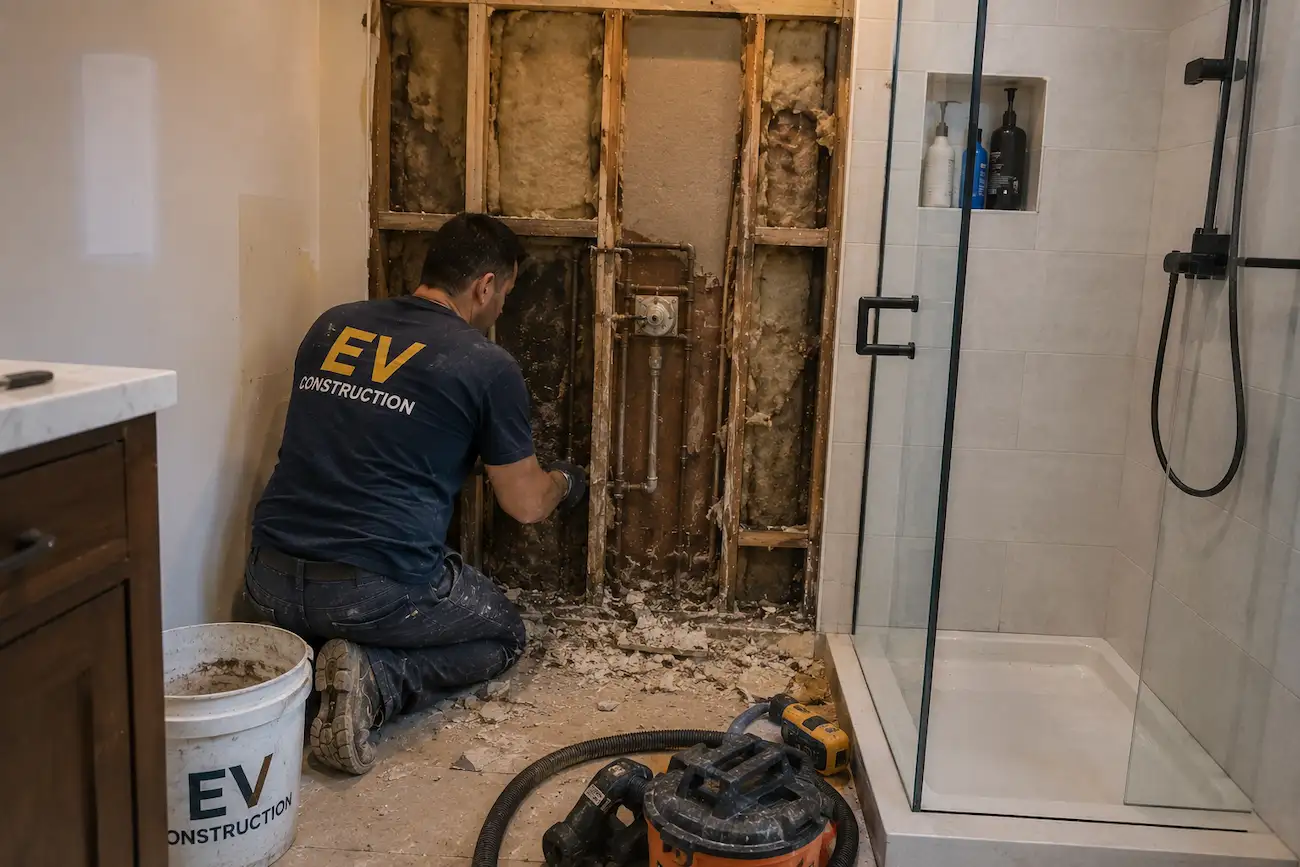
If your vision for a bathroom renovation in Richmond Hill requires more than a cosmetic shift, our team is ready to step in. At EV Construction, we specialize in maximizing every square inch of your home through high-precision craftsmanship and a commitment to transparent pricing. We handle the complexity—permits, structural integrity, and custom finishes—so you can focus on the result.
Contact EV Construction today for a professional consultation and let’s turn your “Pivot” into a masterpiece.