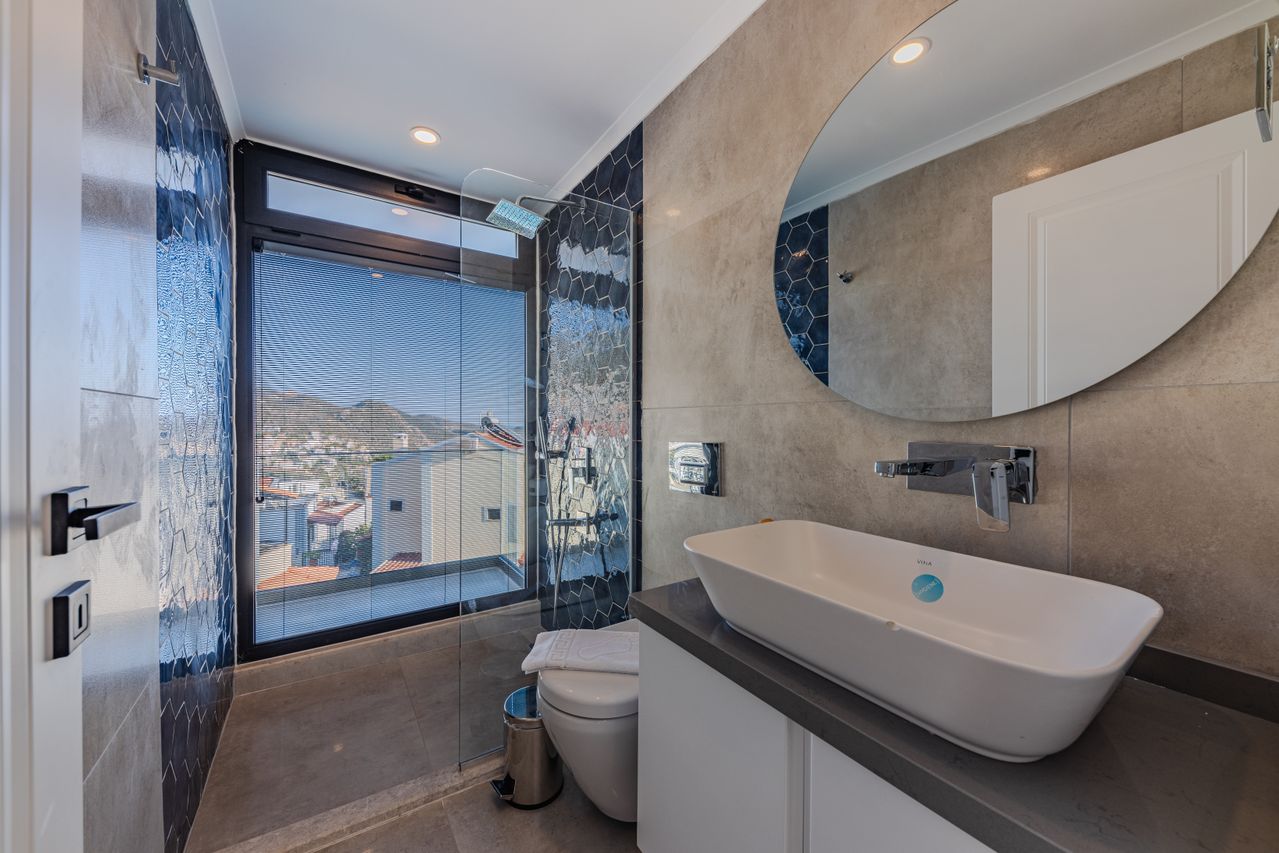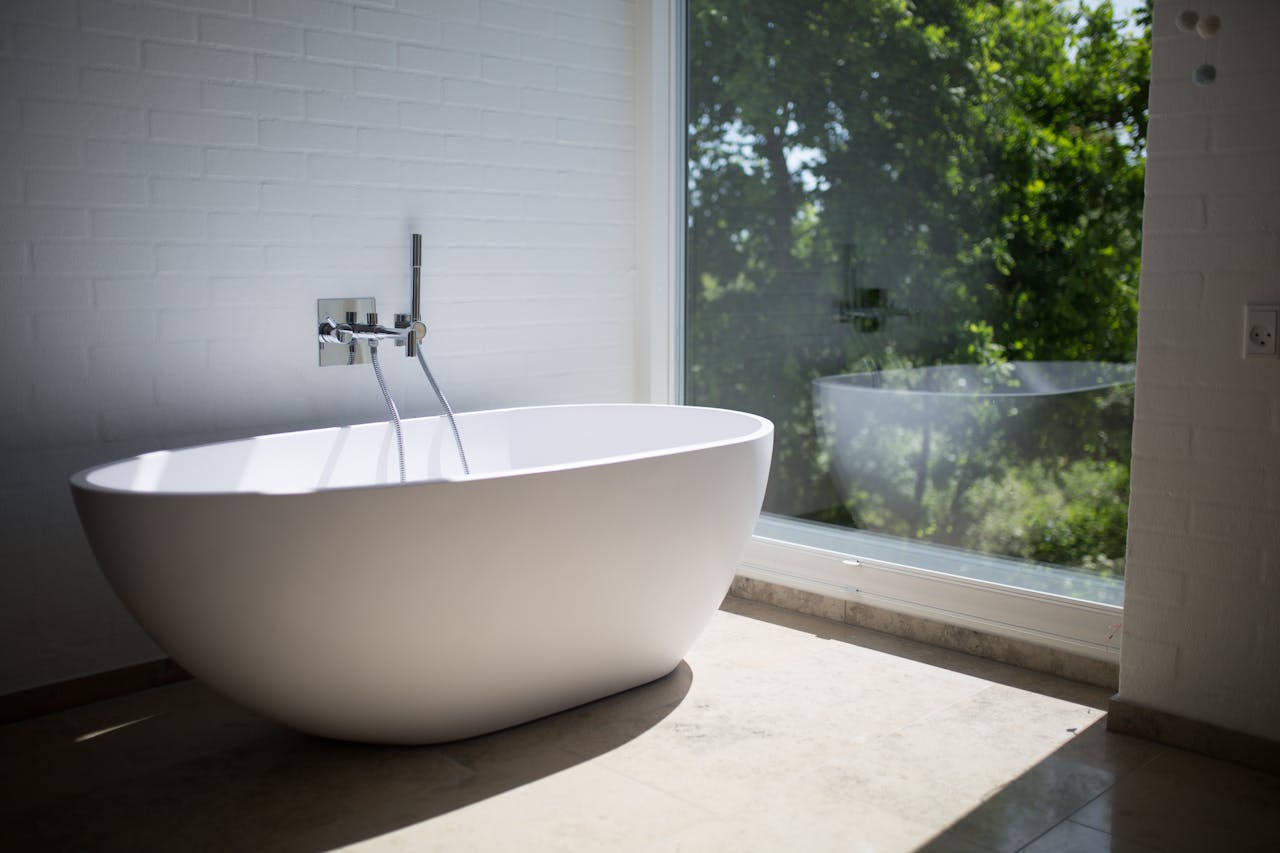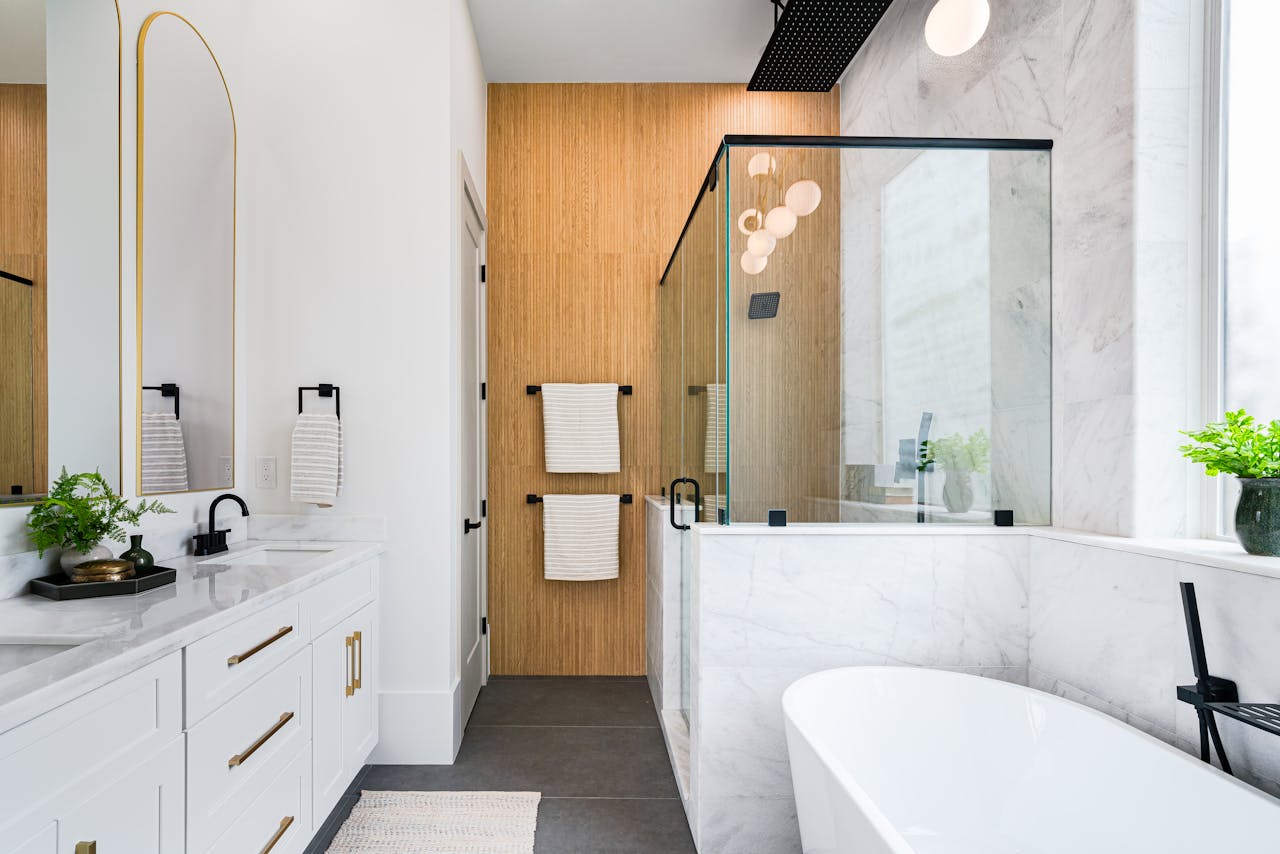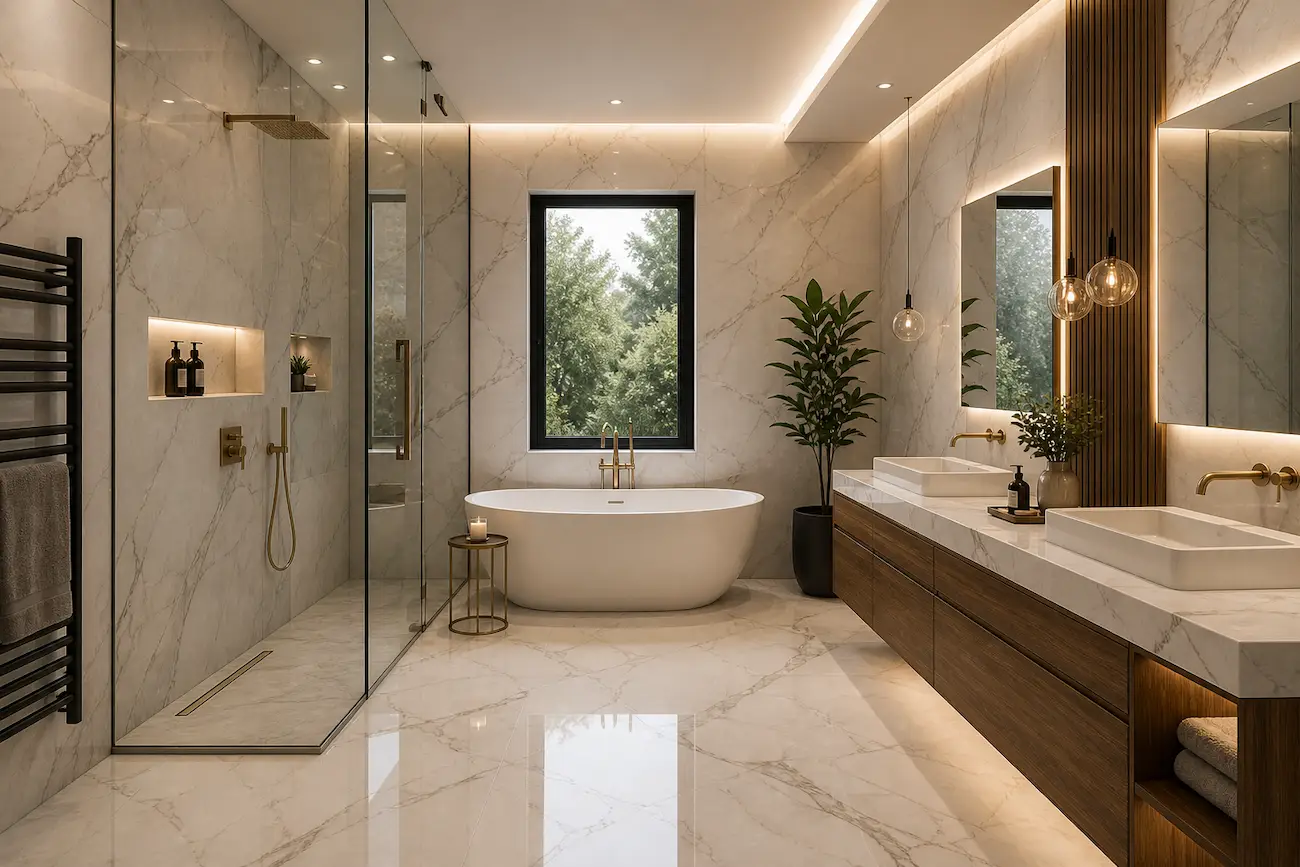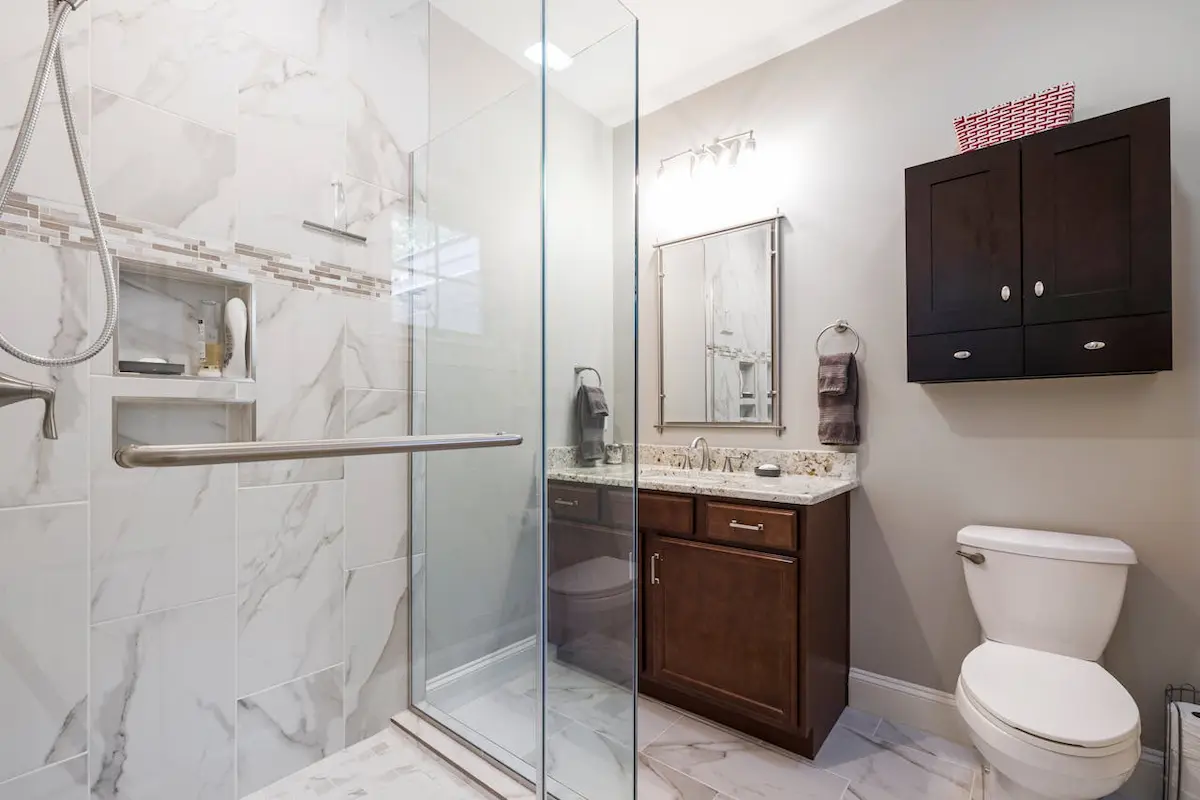
The 2026 Bathroom Anatomy represents a shift from cosmetic upgrades to fully integrated performance design.
If you’re planning a bathroom renovation in 2026, you’re not just swapping out a vanity and choosing a tile, you’re shaping a high performance room where plumbing, power, ventilation, and smart tech converge. As a contractor who’s seen the evolution from standard builder grade baths to today’s wellness forward, sensor driven spaces, I can tell you: the modern bathroom isn’t just about looking good. It’s about how every fixture and facility system works together, quietly, reliably, and safely, day in and day out.
In this master guide, we’ll break down the anatomy of a 2026 bathroom, what’s new, what matters, what to avoid, and how to make choices that age well, conserve water and energy, and feel great to live with. We’ll cover fixtures, infrastructure, waterproofing, ventilation, lighting, and accessibility, then wrap it all up with a practical FAQ.
The 2026 Bathroom Philosophy: Performance First, Aesthetics Close Second
By 2026, the best bathrooms balance three priorities: performance, sustainability, and user experience. The trend toward “spa bathrooms” isn’t just about a larger tub; it’s about a space that self-regulates temperature for comfort and safety, cleans easily, saves water and power, and adapts to changing needs and mobility over time. For a broader look at how these room-specific choices fit into your entire property, consult our complete Richmond Hill Renovation Guide for 2026.
What’s Driving the Change
Water efficiency with better experience.
WaterSense-rated fixtures have matured. A 1.28 GPF smart toilet with integrated bidet can outperform older 3.5 GPF tanks in cleanliness and comfort, and modern 1.75 GPM showers feel better thanks to pressure optimization and spray pattern engineering. This means you don’t have to choose between conservation and comfort.
Invisible tech, real benefits.
Smart mirrors, zoned radiant heat, occupancy sensors, leak-detection valves, and app-tunable lighting sound flashy, but the best installs disappear into the background. In a well-designed system, these features simply keep you comfortable, reduce bills, prevent damage, and extend the life of your finishes.
Aging-in-place by design.
Barrier-free showers, linear drains, and subtle reinforcement in walls for future grab bars have become routine. You’re not “making it look medical;” you’re making it safe and elegant today and tomorrow.
Fixture Selection for Richmond Hill: Balancing 2026 Innovation with Regional Resilience
Smart Toilets & Bidets: Hygiene, Water Savings, and Less Paper Waste
Two products have moved from “nice-to-have” to “you’ll never go back”: smart toilets and integrated bidet seats. In 2026, features like self-cleaning wands, UV sterilization cycles, heated seats, and auto-deodorization are common in mid- to high-end models.
What to look for:
Wash experience quality and easy cleaning. A good system offers adjustable water pressure, temperature, and nozzle positioning, plus a rimless bowl design that resists buildup and cuts cleaning time.
Water and power considerations. Many models run at 1.0–1.28 GPF and require a GFCI-protected power outlet within reach. If power isn’t nearby, plan a dedicated 15A circuit during rough-in; retrofitting later is more costly.
Emergency power modes. Some keep basic flushing available during power outages. It’s rare but worth noting if you live in an area with unreliable electricity.
If your bathroom has cold drafts, a heated seat + lid slow-close combo isn’t just luxury—it prevents accidental slams and nighttime wakeups.
Showers: Thermostatic Control, Barrier-Free Access, and the Rise of the Linear Drain
The modern shower is a performance system centered on temperature stability, drainage, and moisture management.
Thermostatic vs. Pressure-Balancing Valves
Pressure-balancing valves help prevent scalding when someone flushes a toilet elsewhere—good, but temperature can still drift.
Thermostatic mixing valves allow you to set an exact temperature—often with a physical dial for precision—keeping it steady even when line pressure varies. For multi-outlet spa showers (e.g., rain head + handheld), thermostatic is the gold standard in 2026.
The Barrier-Free Shower
A zero-threshold or curbless shower makes the space safer, easier to clean, and more open visually. Proper slope (typically 1/4″ per foot toward the drain) and waterproofing are absolutely non-negotiable.
Linear drains pair beautifully with large-format tile and curbless designs because they allow a single-direction slope. This simplifies tile layout and avoids awkward slicing on multiple planes.
Point drains still work great—just plan tile cuts carefully and use small-format mosaics on the floor to cope with compound slopes. Choosing the right surface is as critical as the drain itself; you can find deep-dives on slip resistance and aesthetics in our bathroom renovation tile guide.
Choose a handheld shower on a slide bar in addition to your main head. It’s useful for rinsing, hair washing, kids, pets, and cleaning the enclosure. Place the bar so it can double as a future grab assist with proper blocking behind the wall.
Tubs: Soaking, Air Baths, and Space-Savvy Design
In 2026, alcove tubs with shower combos are decreasing in fully custom primary suites, but still excellent for family baths. For primary baths, consider:
- Deep soaker tubs with sloped backs for comfort. No jets to maintain, lower noise, and simpler plumbing.
- Air baths (micro-bubble systems) add spa feel without the bacteria and pipe maintenance issues of old whirlpools. They require a dedicated electrical circuit and periodic cleaning but are quieter and gentler.
Space planning tip: If space is tight, a 60″ x 30″ alcove tub-shower combo with a good pressure-balanced valve and a quality glass door can still look premium with the right tile and lighting. If you are dealing with a compact layout, we have compiled a specific list of small bathroom renovation ideas for Richmond Hill that maximize every square inch.
Vanities & Sinks: Storage, Stone, and Sensor Faucets
2026 vanities are less about ornate cabinetry and more about smart storage, water-resistant materials, and integrated power.
Drawer-first layouts outperform doors for everyday use. Organizers for hair tools, hidden outlets inside drawers (with heat sensors), and docking for electric toothbrushes make daily life simpler and cleaner.
Durable tops: Quartz and sintered stone (porcelain slabs) resist etching and staining better than marble. If you love marble, consider it for vertical surfaces and use honed finishes to disguise etching.
Faucets: Single-handle faucets remain popular for ease, but sensor-activated faucets have improved responsiveness and reduce water waste and fingerprints. Look for models with both manual and auto modes and confirm they’re easy to service.
Mirrors & Medicine Cabinets: Light Where You Need It
Backlit, edge-lit, and tunable-color mirrors are now mainstream. They solve a real problem: shadows on the face during grooming.
Color temperature matters. For makeup, aim for CRI 90+ and a balanced 3500–4000K task setting. Many mirrors now have preset scenes and anti-fogging features tied to a humidity sensor.
Recessed medicine cabinets with built-in power and lighting keep counters clean and chargers hidden. Ensure your wall cavity (often 2×6 is ideal) and electrical plan can accommodate the unit you want.
Materials and Waterproofing: The Hidden Heroes
The Waterproofing Stack: Membranes, Backer Boards, and Redundancy
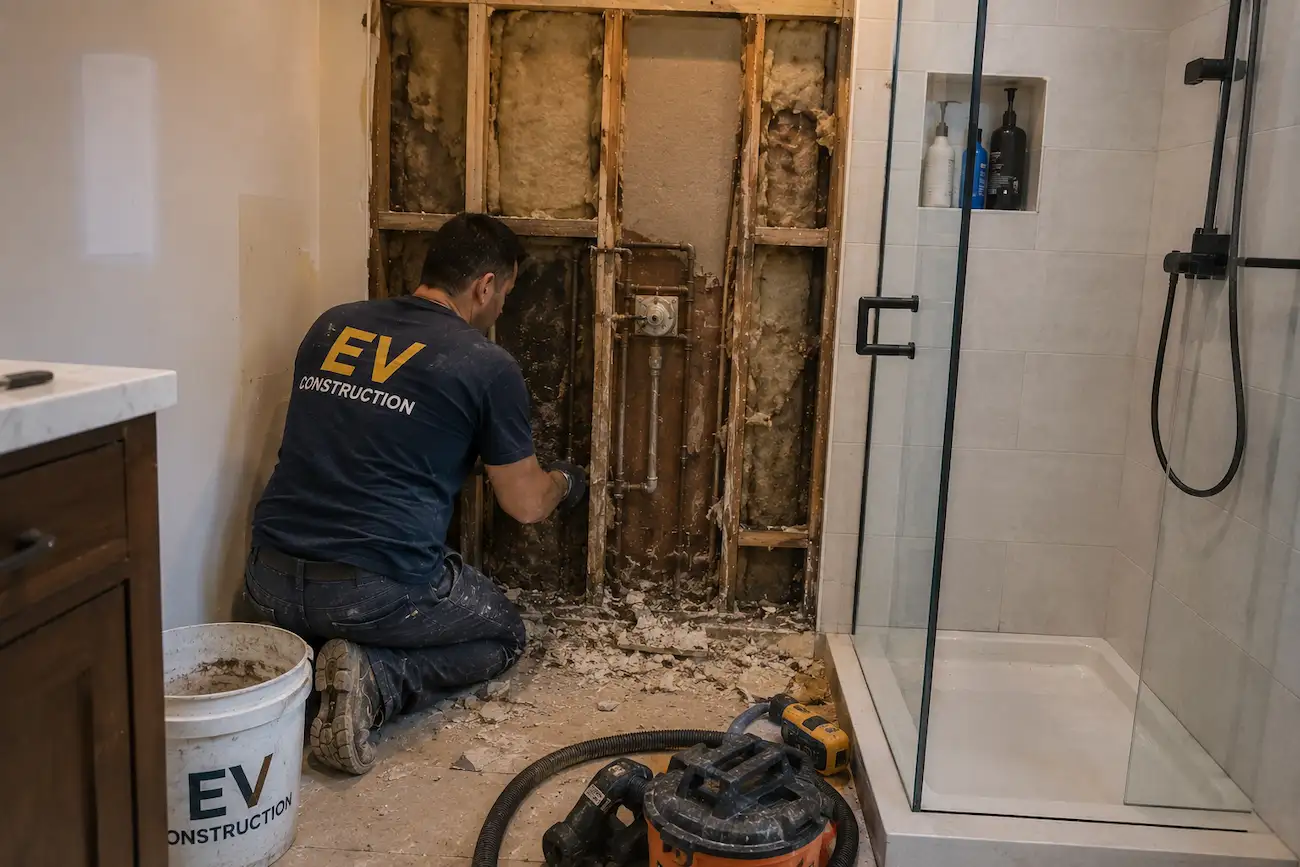
Even the most beautiful tile installation will fail if moisture is allowed to penetrate behind it. In modern bathroom construction, waterproofing is treated as a layered system, not a single product.
- Cement board or foam-core backer board must be used in wet areas. Standard drywall should never be installed inside shower enclosures.
- Sheet membranes or liquid-applied waterproof coatings must be installed over the backer and tied directly into the drain assembly to create a continuous waterproof envelope.
- Shower niches must be carefully sloped and reinforced at all inside corners, which are common failure points.
Extend waterproofing beyond the immediate shower area to protect splash zones near tubs, half-walls, and transition points.
Floor Systems: Heat, Sound, and Slip Resistance
Radiant floor heating remains one of the highest comfort-to-cost upgrades available. Electric heating mats or cables installed beneath tile provide consistent warmth and help surfaces dry faster, reducing moisture retention.
Use floor temperature sensors with programmable thermostats to prevent overheating and improve energy efficiency.
Select tile with appropriate slip resistance for wet environments. Honed or textured porcelain performs better than polished finishes when exposed to water.
In multi-level homes or condominiums, consider acoustic underlayment to reduce impact noise and plumbing transmission between floors.
Plumbing: PEX vs. Copper, Valves, and Leak Defense
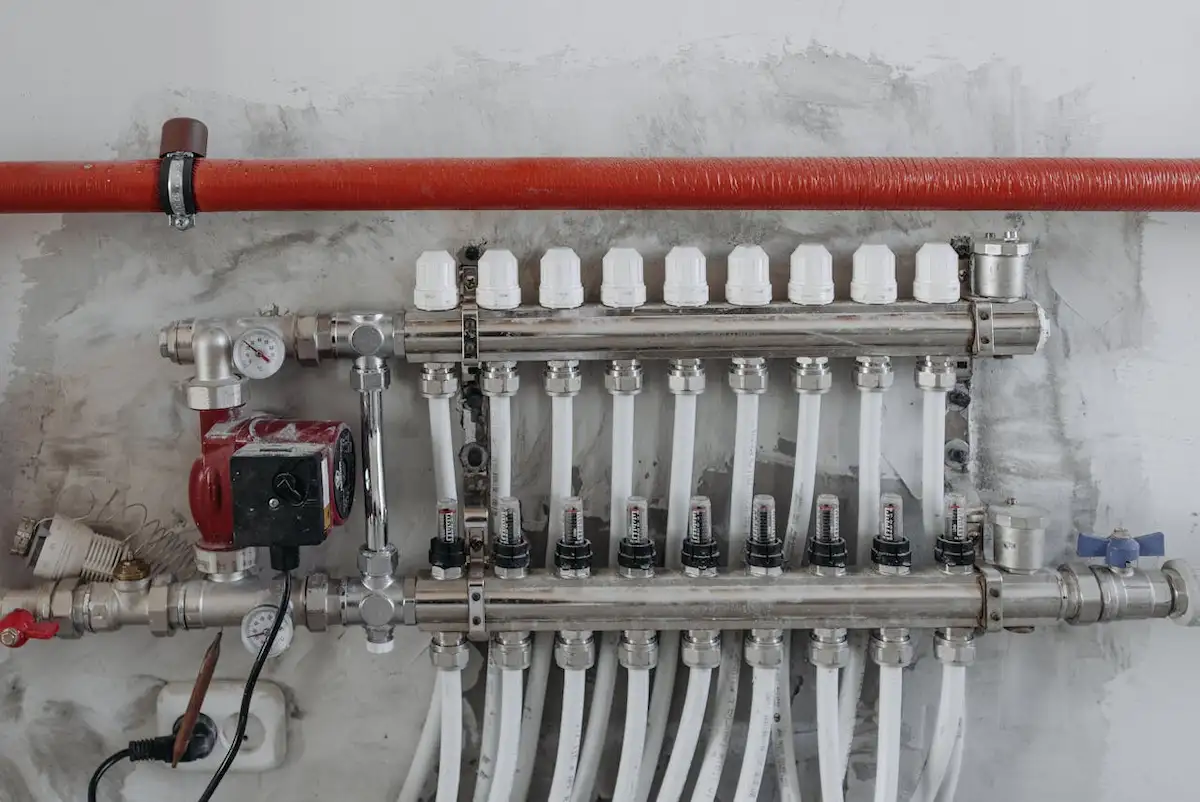
PEX vs. Copper
Cross-linked polyethylene (PEX) supply lines are widely used due to flexibility, reduced fittings, and resistance to freeze damage. Copper remains viable in certain applications, particularly where higher heat tolerance is required.
Manifold plumbing systems with dedicated home-run lines improve temperature consistency and simplify maintenance. Proper labeling at the manifold reduces future service complications.
Mixing Valves and Fixture Stops
Accessible shutoff valves should be installed at each fixture location. Service stops integrated into shower valve bodies allow maintenance without shutting off water to the entire home.
Leak Detection and Automatic Shutoff
Smart leak sensors placed under vanities, near toilets, and around tubs can connect to automatic main shutoff valves. These systems significantly reduce the risk of catastrophic water damage and may qualify for insurance discounts.
The Richmond Hill Context: Homeowners in York Region often deal with varying levels of water hardness. In 2026, we recommend installing high-quality thermostatic cartridges and PEX systems that are resistant to scale buildup. If your home is in an older pocket of Richmond Hill, we also suggest a professional inspection of the main stack to ensure modern high-pressure fixtures don’t overwhelm aging drainage lines.
Electrical & Lighting: Layered, Safe, and Smart

Dedicated Circuits and Code Compliance
- Dedicated 20A GFCI-protected circuits for bathroom receptacles.
- Separate circuits for radiant heating systems, smart toilets, steam showers, or towel warmers.
- Compliance with AFCI/GFCI requirements based on local jurisdiction.
Lighting Layers
A well-designed bathroom incorporates multiple lighting layers: ambient ceiling lighting, task lighting at face level, and accent lighting for depth and nighttime navigation.
High color rendering index (CRI) lighting improves grooming accuracy. Balanced color temperatures between 3500K and 4000K provide natural skin tone representation. For professional lighting standards and performance benchmarks, review Illuminating Engineering Society lighting recommendations .
Keep ventilation and primary lighting on separate switches so humidity control does not depend on leaving lights on unnecessarily.
Ventilation: Humidity Control Is Non-Negotiable
Bathrooms generate high levels of moisture. Properly sized ventilation fans prevent condensation damage, mold growth, and premature finish failure.
Select a fan rated appropriately for the room volume. Timer or humidity-sensing switches ensure continued operation after showers to fully clear residual moisture.
Insulated ducting reduces condensation buildup in colder climates and improves system longevity.
The 4-Season Factor: In the Greater Toronto Area, the swing from humid summers to bone-dry winters creates significant stress on bathroom joints. Humidity-sensing fans are no longer a luxury in Richmond Hill; they are a structural necessity to prevent the ‘freeze-thaw’ effect on window seals and the perimeter of the building envelope.
Storage and Space Planning: A Place for Everything
Thoughtful storage reduces clutter and preserves the intended design aesthetic.
Full-height storage towers, recessed medicine cabinets, shower niches, and integrated hampers improve usability without consuming additional floor area.
Accessibility & Safety (Without Compromising Style)
Reinforced framing for future grab bars, slip-resistant flooring, and comfort-height fixtures provide long-term safety without altering visual appeal.
Finishes That Last: Coatings, Grout, and Maintenance
Epoxy grout resists staining and eliminates the need for periodic sealing in wet environments.
Anti-spot coatings on glass and faucet finishes reduce mineral buildup and simplify routine cleaning.
Sustainability & Utility Savings: Smart Where It Counts
Water-efficient fixtures combined with energy-efficient lighting and radiant heating systems reduce operating costs while maintaining comfort.
Some projects include provisions for future greywater systems where local building codes permit.
Local Incentives: Before selecting your 2026 fixtures, check current York Region water conservation programs. Often, the city offers incentives for moving to ultra-low-flow toilets, helping offset the cost of high-performance anatomy upgrades.
Budgeting and Phasing: Where to Splurge, Where to Save
Before diving into the anatomy, it is essential to understand the market. We’ve analyzed the latest data in our report on bathroom renovation costs in Toronto and Richmond Hill. Invest in waterproofing, ventilation, valve quality, and electrical infrastructure first. These components are costly to retrofit later.
Mid-range porcelain tile and engineered stone countertops provide durability without excessive cost. Upgrade daily-use features that enhance comfort rather than decorative trends that may age quickly.
A Model 2026 Bathroom Stack
A coordinated 2026 bathroom build includes reinforced framing, dedicated plumbing runs, thermostatic shower controls, radiant floor heating, full waterproof membrane systems, layered lighting, humidity-controlled ventilation, and integrated leak detection.
When these systems are installed as a cohesive unit, the bathroom performs reliably for years with minimal intervention.
Maintenance Practices That Keep Your Bathroom New
Periodic inspection of sealants, cleaning of ventilation grilles, and testing of GFCI outlets preserve safety and longevity.
Replace filters and service smart components according to manufacturer schedules.
Common Pitfalls to Avoid
- Undersized ventilation systems.
- Insufficient waterproofing coverage.
- Improper drain slope planning.
- Overcomplicated smart features that lack long-term support.
Frequently Asked Questions (FAQ)
Do smart toilets justify their cost?
Premium bidet seats deliver most benefits at lower cost, while integrated smart toilets provide enhanced design and self-cleaning performance.
Is thermostatic control necessary?
For multi-outlet showers and high-end builds, thermostatic control offers superior stability and comfort.
Are curbless showers durable?
When properly sloped and waterproofed, curbless showers perform as reliably as traditional designs.
Final Word
A 2026 bathroom is not defined by surface materials alone. It is a coordinated system where plumbing, power, waterproofing, ventilation, and fixtures function together seamlessly. When performance drives the design, the result is a space that remains comfortable, efficient, and reliable for years to come. Ready to start your build? Learn more about our specialized process for bathroom renovation in Richmond Hill .
Ready to start your project? Contact EV Construction today for a professional consultation.
Our team specializes in maximizing every square inch of your home with quality craftsmanship and transparent pricing.
Let’s build the bathroom you’ve always wanted.