When homeowners plan a bathroom renovation, their attention usually goes to tiles, vanities, fixtures, and flooring. The ceiling, however, is often overlooked. Yet this surface has a powerful impact on how the space looks and feels. A well designed ceiling can make a compact bathroom feel more open, transform a basic ensuite into a calming spa inspired space, or discreetly conceal functional elements without sacrificing style. If you’re planning a full project this year, check out our comprehensive Richmond Hill Renovation Guide for 2026 for local trends and pricing.
In this article, we explore seven creative bathroom ceiling ideas. Each concept is explained in detail, with practical insights, technical considerations, and real world examples to help you rethink the role of the ceiling and elevate your next bathroom renovation. Whether you’re updating a heritage home in Old Richmond Hill or a modern condo near Yonge and Highway 7, these ceiling choices can define your space.
Why Bathroom Ceilings Deserve More Attention
Bathrooms deal with some of the harshest conditions in the home: moisture, heat, ventilation needs, and frequent lighting demands. A standard coat of paint may look fine initially, but it won’t always stand up to years of steam and humidity. More importantly, leaving the ceiling as an afterthought means missing a major design opportunity.
A well-executed ceiling can:
- Visually expand the room
- Add warmth or texture
- Improve acoustics
- Conceal ducts, wiring, or structural limitations
- Define separate zones in larger bathrooms
- Bring character into an otherwise minimal space
When you approach the ceiling with intention instead of “default white drywall,” you open the door to a completely different bathroom experience.
Contractor note
If your bathroom struggles with humidity, don’t treat it as “just a design issue.” In Richmond Hill’s climate, we see significant humidity swings between seasons.Ventilation and moisture control are the foundation. For a quick reference on moisture and mould prevention, see Health Canada’s guide to addressing moisture and mould indoors.
1. Moisture-Resistant Painted Ceilings for Richmond Hill Homes
A small change that delivers big impact
Painting a ceiling isn’t groundbreaking—but choosing how you paint it can be. Colour shifts the atmosphere of a bathroom more than most people expect. A deeper tone overhead pulls the room together and creates a cocoon-like feel, making baths feel more relaxing. Lighter tones can lift low ceilings, making compact bathrooms feel larger.
Matte or satin? The finish matters
In a bathroom, you need paint formulated to resist mildew and moisture. Satin finishes offer better cleanability, but many designers prefer matte for its sophisticated look. High-quality moisture-resistant matte paints strike a balance by masking imperfections while still staying durable against steam.
Creative ideas to consider
- Soft charcoal ceilings: Perfect in a modern ensuite with white or marble walls. The contrast adds luxury without overwhelming the space.
- Warm taupe or sand tones: These pair beautifully with natural wood vanities and stone tile, creating a spa-like environment.
- Colour drenching: Painting walls, ceiling, and trim the same tone creates a seamless, immersive, European-style effect.
This is one of the most budget-friendly yet transformative ceiling upgrades.

2. Wood Ceilings for Warmth and Texture
Why wood works in bathrooms
Many clients fear wood in bathrooms, but properly treated wood performs well—even in humid environments. It brings a natural warmth that balances cold finishes like porcelain tile and stone.
Best wood choices
- Cedar: Naturally moisture-resistant and aromatic.
- Teak: A high-end option commonly used on boats and outdoor applications for its durability.
- Engineered wood panels: Designed for stability, reducing the risk of warping.
Installation notes you shouldn’t ignore
- Proper ventilation: A good exhaust fan keeps humidity levels stable.
- Sealing: Use water-resistant finishes that maintain the wood’s colour and longevity.
- Spacing: Slight gaps between planks allow natural expansion and contraction without cracking.
Where wood really shines
Wood ceilings excel in primary ensuites, sauna-inspired bathrooms, or any home where you want an upscale, nature-forward look. Even a single feature panel above the bathtub can completely alter the room’s character.
3. Coffered or Beamed Ceilings for Architectural Interest
Adding structure without making the room feel heavy
Coffered ceilings or decorative beams add dimension and a sense of craftsmanship. While commonly associated with living rooms or dining spaces, they can make a bathroom feel custom-built.
Before you start framing out a coffered ceiling or waterproofing a steam shower, ensure your project complies with local building codes. You can read our guide on Bathroom Renovation Permits in Richmond Hill to avoid any site delays.
In practice, this is one of the easiest ways to make a bathroom feel more “finished” without changing the layout. The ceiling stops being a blank lid, and starts looking like part of the room’s architecture. The trick is scale. Bathrooms are tight spaces with lots of hard surfaces and bright lighting, so too much ceiling detail can quickly make the room feel busy or lower than it is.
Done well, coffers and beams do a few useful things at once:
- They break up a flat ceiling plane so lighting feels less harsh and the space feels more intentional.
- They can visually frame zones, like a vanity wall or a tub area, especially in larger bathrooms.
- They give you clean places to plan recessed lights, speakers, or other ceiling elements so they don’t look random.
Two approaches
- Full coffered ceiling: Square or rectangular recesses outlined by beams for a polished, traditional look.
- Simple beams: Painted or stained faux beams that add depth without overwhelming a small room.
Full coffers look best when the room has enough width for the pattern to “breathe.” If the bathroom is smaller, the simpler beam approach usually reads cleaner and more modern. A couple of well-placed beams can add depth without turning the ceiling into the feature everyone notices first.
Practical considerations
- Ceiling height: These styles work best in bathrooms with at least 8-foot ceilings. If the ceiling is lower, keep beams shallow and reduce the amount of detail so it doesn’t feel heavy.
- Material type: Use moisture-resistant MDF or wood specifically finished for humid environments. If you’re painting the detail, make sure edges and joints are sealed properly so humidity doesn’t cause swelling over time.
- Lighting: Coffers can cleverly integrate recessed lights, hiding wiring and reducing glare. The best results happen when the coffer layout is planned around the lighting plan, not after.
If you want a clear visual of how coffered ceilings are typically framed and laid out, this overview is a helpful reference:
Everything You Need to Know to Build a Coffered Ceiling.
A coffered or beamed ceiling is ideal for homeowners seeking timeless elegance.
4. PVC and Vinyl Ceiling Panels for Moisture-Rich Bathrooms
A waterproof solution that still looks stylish
PVC and vinyl ceiling systems have come a long way from the plastic-looking panels of decades past. Modern panels mimic wood, matte finishes, or sleek contemporary textures. Best of all, they are fully water-resistant, making them perfect for bathrooms with heavy steam—especially those without windows.
Why homeowners choose them
- Low maintenance: They won’t warp, mould, or require repainting.
- Easy to clean: A simple wipe-down keeps them looking fresh.
- Budget-friendly: Cheaper than wood or tile but still visually appealing.
Installation benefits
Panels often click into place, covering uneven existing ceilings without extensive drywall prep. They can also hide ducts, pipes, or wiring that aren’t easily rerouted.
PVC ceilings are an underrated option for rental units, basements, or family bathrooms needing durability and longevity.
5. Tiled Ceilings: The Best Choice for Local Steam Shower Renos
The ultimate spa-level upgrade
If you’re building a steam shower or wet room, running tile or stone up the walls and across the ceiling creates a seamless, high-end appearance and prevents moisture issues.
Steam changes the rules. Regular shower humidity mostly falls and dries out with ventilation, but steam rises, spreads, and condenses wherever it hits a cooler surface. That means the ceiling takes a lot of punishment, and any weak spots—poor prep, improper waterproofing, or the wrong backing—show up faster than in a standard shower.
Key design advantages
- Visual continuity: A fully tiled enclosure feels intentional and luxurious.
- Moisture control: Tile and stone protect structural elements from constant humidity and heat.
- Easy maintenance: With good grout and sealant, cleaning stays straightforward.
The “spa feel” comes from continuity. When the ceiling is tiled, the whole shower reads as one complete enclosure instead of a finished wall with a different-looking lid above it.
Essential technical considerations
- Ceiling slope: Steam showers need a slight pitch so condensation doesn’t drip onto your head. Even a small slope makes the shower feel noticeably more comfortable during long sessions.
- Weight capacity: Tile ceilings require solid backing—cement board, not drywall. Overhead tile is unforgiving if the substrate moves or flexes.
- Proper waterproofing: A continuous membrane is non-negotiable for safety and durability. The tile is not the waterproofing; the system behind it is.
One detail people forget is penetrations. Any ceiling fixture (rain head, light, speaker) needs to be planned and sealed correctly. In steam environments, small gaps become problems because moisture finds them. Planning these items early usually saves money and avoids rework later.
If you want a straightforward overview of what goes into a steam shower and what to consider before committing, this is a practical primer:
Steam Showers: How It Works and What to Know Before Installing One.
This option is the most expensive on the list but worth it for homeowners seeking a true spa experience.
6. LED Backlit or Floating Panel Ceilings
A modern, atmospheric lighting upgrade
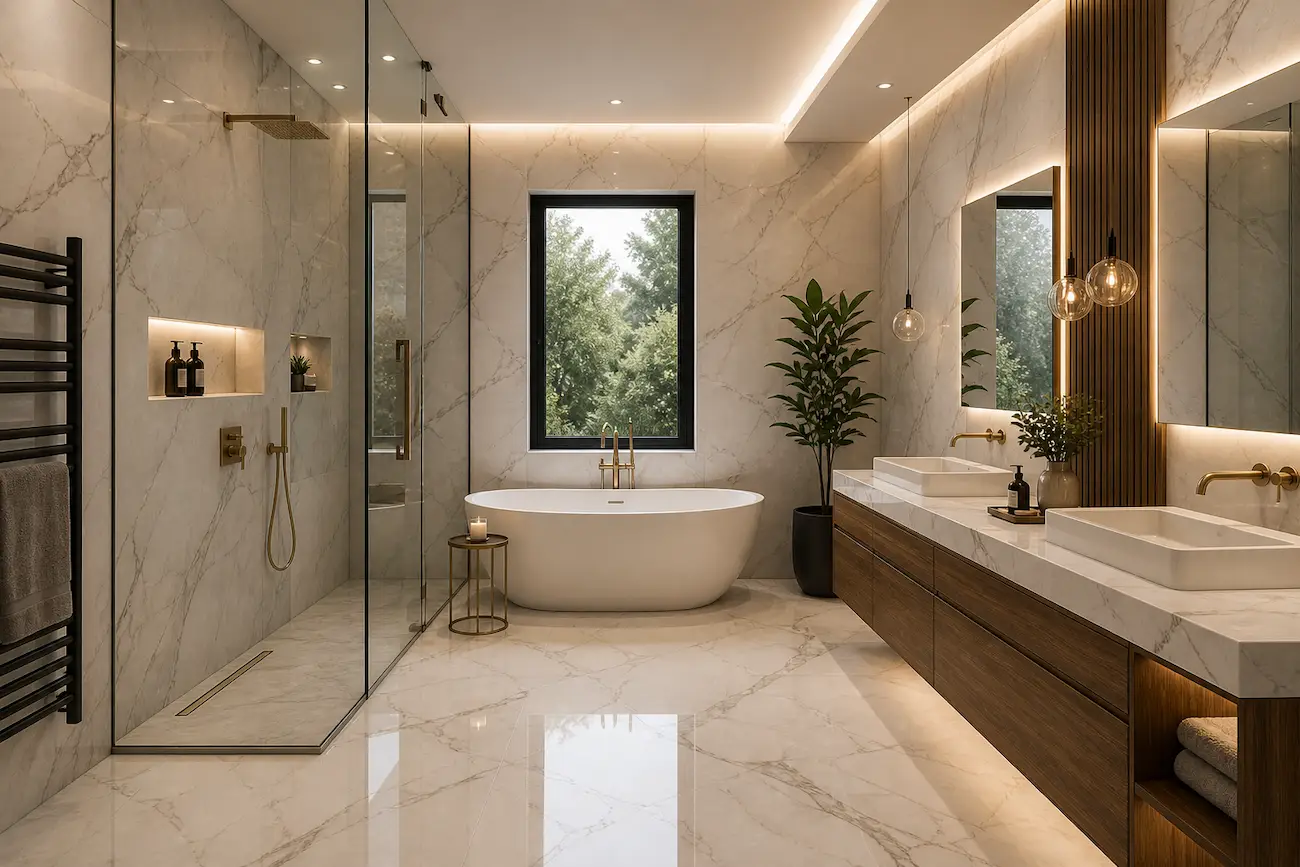
Floating ceilings—panels mounted a few inches below the structural ceiling—allow LED lighting to glow around the panel edges. This creates a soft, indirect illumination that’s perfect for relaxing baths or early mornings when you don’t want harsh lighting.
Customization options
- Frosted acrylic center panels with perimeter LEDs for a clean hotel-style look.
- Recessed channels that house warm or cool LED strips.
- RGB options (used sparingly) for mood lighting around tubs.
Why homeowners love it
- Smooth, shadow-free light ideal for applying makeup or shaving.
- A “floating” design feature that instantly modernizes the room.
- Energy efficiency thanks to low-power LEDs.
Floating ceilings work exceptionally well in contemporary bathrooms or condos where visual impact matters. Floating ceilings work exceptionally well in contemporary bathrooms. To see how these lighting features integrate with smart showers and touchless tech, see our Bathroom Fixtures & Technology Guide.
7. Decorative or Patterned Ceilings for Bold Style
When you want the ceiling to be the focal point
Sometimes the best bathroom designs aren’t shy—they’re expressive. A patterned ceiling can set the entire tone of the room.
Popular options
- Wallpaper (moisture-resistant vinyl): Ideal for powder rooms where humidity is minimal.
- Stenciled patterns: Great for DIYers who want a custom look.
- Metallic or limewash finishes: Create a vintage or European aesthetic.
How to keep bold choices balanced
- Pair busy ceilings with calm, solid-colour walls.
- Use finishes that are easy to maintain and moisture-tolerant.
- Introduce subtle repeating elements (e.g., matching hardware tones or floor tile accents).
Patterned ceilings shine in small spaces like powder rooms where you want to make a memorable impression.
Bringing It All Together
A bathroom ceiling isn’t just a blank surface overhead—it’s an opportunity to inject personality, function, and craftsmanship into the room. Whether you prefer the warm elegance of wood, the drama of painted ceilings, the practicality of PVC, or the luxury of tile and stone, your ceiling can elevate your bathroom from ordinary to unforgettable.
When planning your next reno, treat the ceiling with the same design attention as your vanity or shower tile. The difference in atmosphere might surprise you.
Ventilation tip
If you’re upgrading finishes (wood, paint, panels, tile), pair it with proper exhaust. For a simple benchmark on selecting efficient fans, see ENERGY STAR ventilation fan guidance.
Planning a bathroom renovation in Richmond Hill or the York Region? Contact us today for a free on-site consultation and let’s discuss how to elevate your ceiling design.
FAQ: Bathroom Ceiling Ideas & Renovation Tips
1. What ceiling material is best for high-humidity bathrooms?
Tile, PVC, and moisture-resistant drywall with proper paint are top performers. Tile and stone work especially well in steam showers, while PVC panels resist warping and mould. If choosing wood, ensure strong ventilation and use water-resistant finish coatings.
2. Can wallpaper work on a bathroom ceiling?
Yes—if you choose moisture-resistant vinyl wallpaper and limit it to bathrooms with good ventilation or powder rooms without showers. Traditional paper wallpapers may peel or bubble from humidity.
3. Are wood ceilings safe in bathrooms?
Absolutely. Woods like cedar or teak handle moisture well, especially when sealed properly. Good ventilation is key. Wood ceilings are common in saunas and high-end spas for a reason—they add warmth and natural beauty.
4. How do I prevent mould or peeling paint on the ceiling?
Use a high-quality bathroom-rated paint, ensure your exhaust fan is properly sized, and run the fan for at least 20 minutes after showers. Address leaks or condensation quickly, and avoid flat, low-quality paints that trap moisture.
5. Do tiled ceilings require special installation?
Yes. You need cement board backing, not drywall, and a strong thinset suitable for overhead applications. Steam showers also require the ceiling to be sloped so condensation doesn’t pool and drip.
6. What’s the easiest ceiling upgrade for a tight budget?
Painting remains the most cost-effective approach. A bold or moody colour transforms the space instantly. Updating the lighting at the same time yields an even bigger improvement. While some ceiling upgrades are DIY-friendly, complex installations like steam-rated tile or coffered wood require a specialist. Here is how to Choose the Right Bathroom Reno Contractor for your Richmond Hill home.
7. How important is lighting placement in ceiling design?
Critical. Recessed lighting, backlit panels, or dimmable fixtures can shape the mood and function of the space. Proper lighting ensures you avoid shadows around the mirror and maintain even illumination across the room.
If you want the simplest upgrade first, start with paint and lighting. If you’re rebuilding a shower area, plan the ceiling early—especially in wet rooms and steam setups. The ceiling is one of the few surfaces that can add design impact without adding clutter.