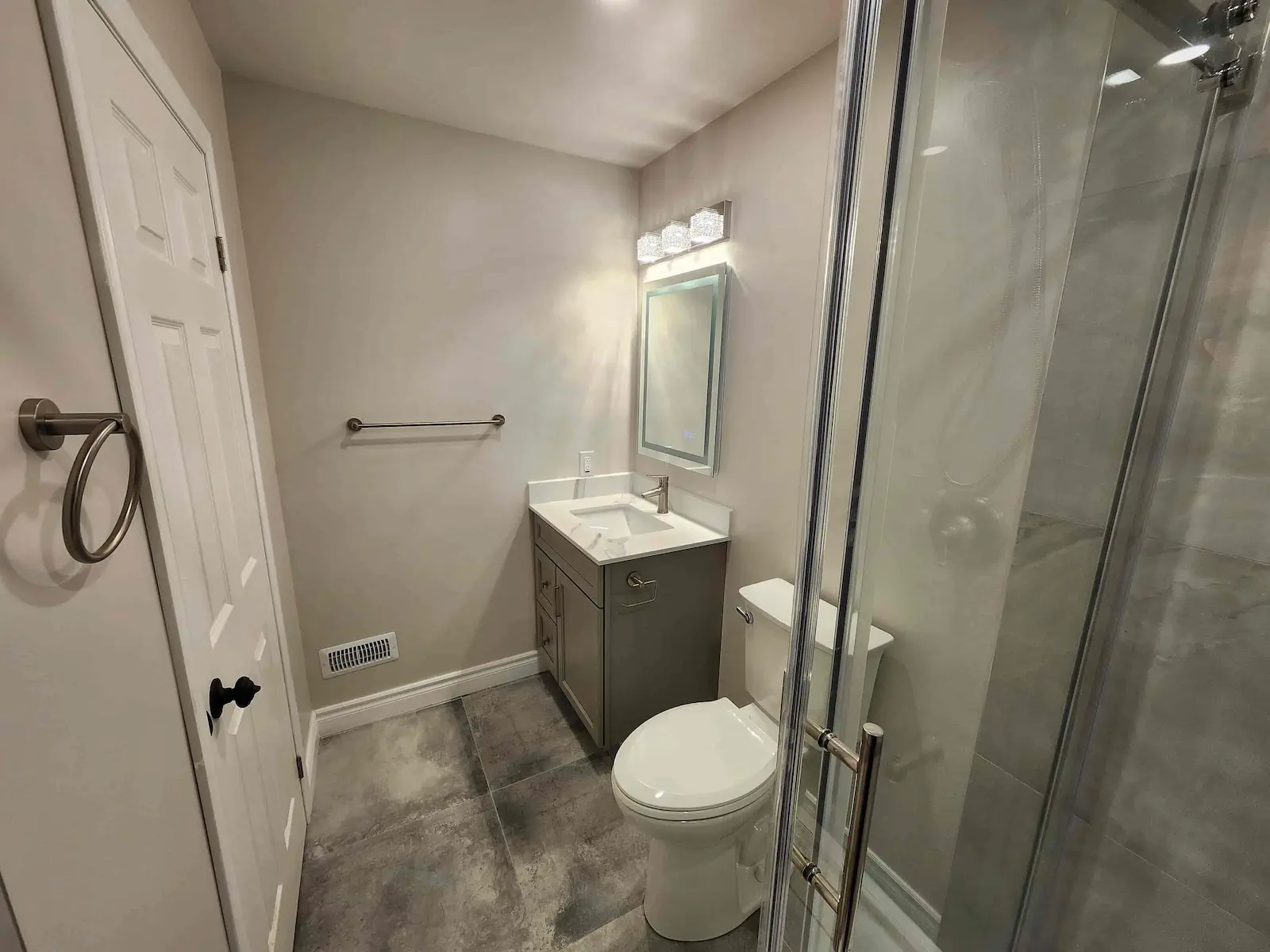
While bathroom renovation in Richmond Hill is a high-value investment, the secret to a 5-star result is managing the timeline. This guide explains what actually causes delays and what you can do to keep your renovation moving.
Bathroom renovation delays are common even on well planned projects because bathrooms combine plumbing, electrical, waterproofing, ventilation, and detailed finish work in a small space. When one piece runs late, the rest of the schedule usually follows. The good news is that many delays are preventable when you understand where projects typically get stuck and you plan around those pressure points.
Common reasons bathroom renovations get delayed
Bathrooms look small, but the renovation process is dense. You are stacking multiple technical systems and finishing steps into a tight area, and most steps must happen in a specific order. Demolition comes first, then rough plumbing and electrical, then inspections, then walls close, then waterproofing and cure time, then tile and finishes, then final fixtures. When one stage runs late, the next stage often cannot start, even if everyone is ready. Most delays fall into a few predictable categories. Hidden damage only becomes visible after demolition, older plumbing or electrical gets discovered and must be corrected, materials arrive late or wrong, trades cannot line up perfectly, inspection schedules do not match renovation schedules, or changes are made mid project. The goal is not pretending delays never happen, the goal is planning in a way that keeps issues from turning into major setbacks.Hidden issues behind walls and under floors
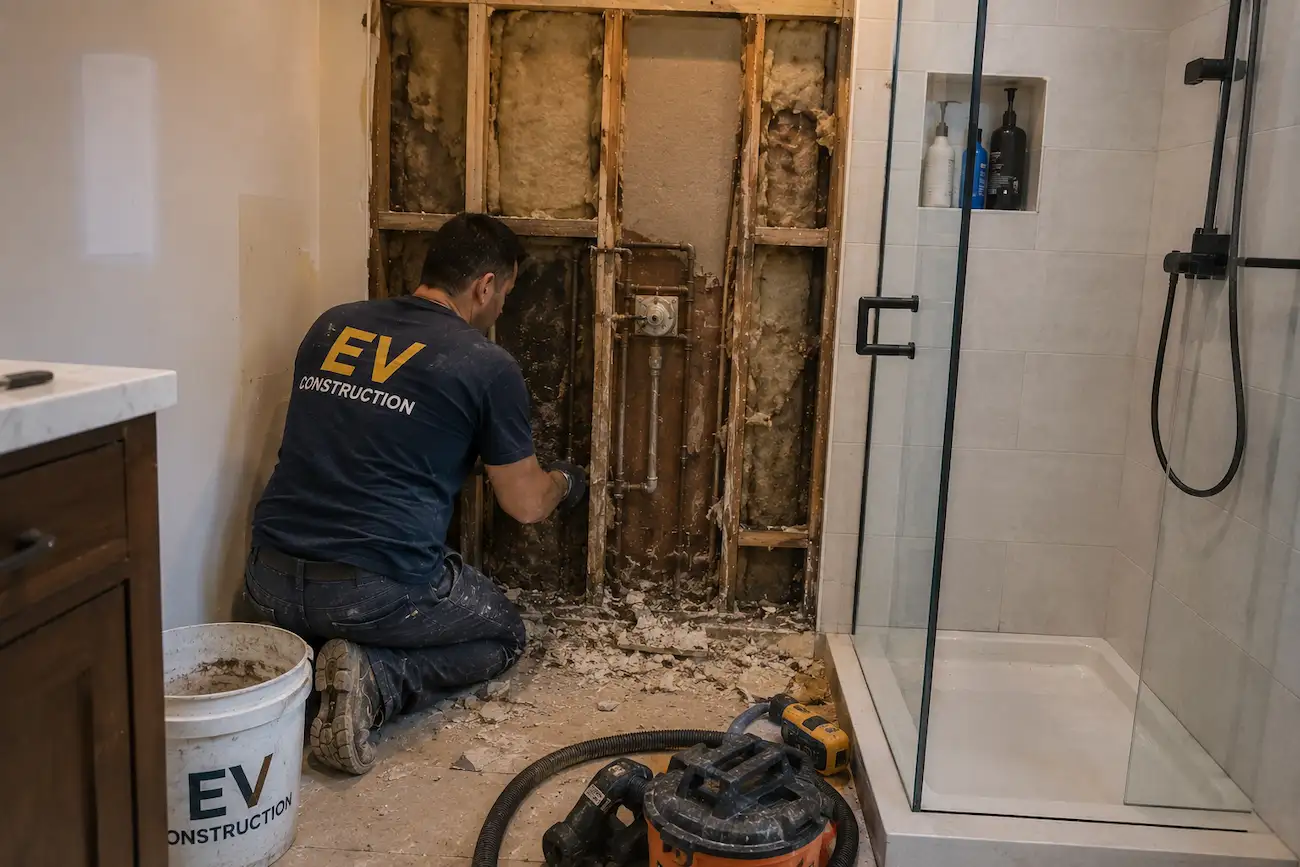
Most serious delays begin the moment demolition starts. Until tile, drywall, and flooring are removed, there is no reliable way to see what condition the bathroom is truly in. Many problems stay hidden for years and only become visible once the renovation is underway. When those issues appear, the timeline changes because the work must shift from renovation to repair before the new finishes can be installed. Visit common bathroom renovation mistakes that drain your budget.Water damage and moisture history
Long term water staining is one of the first warning signs contractors notice. It often appears on the bottom plates of walls, on studs near the tub edge, around shower plumbing, or near the toilet flange. Stains are not just marks, they are evidence that moisture has been present repeatedly over time. Even if the area feels dry during demolition, staining suggests a slow leak, chronic condensation, or failed waterproofing that has been happening in the background. Once staining is discovered, a responsible contractor has to confirm the source. That may involve checking supply lines and shutoffs, testing drains, inspecting the condition of seals and caulking, and looking at how the shower was waterproofed, if it was waterproofed at all. This investigation takes time, but it prevents rebuilding on top of an unsolved problem. For general homeowner guidance on mold and moisture, you can review Health Canada information about mould.Soft or darkened framing
Soft or darkened framing usually means the wood has been absorbing moisture long enough to weaken. Sometimes it feels spongy when pressed, sometimes it crumbles at the edges, and sometimes it looks darker than the surrounding studs. This matters because tile, glass, and heavy fixtures rely on framing for support. If the framing is compromised, it cannot safely hold a wall mounted vanity, a niche, a grab bar, or a glass enclosure. Fixing framing can be small or extensive. In mild cases, you replace a few studs or a section of bottom plate. In more serious cases, you rebuild entire wall sections and add proper blocking so fixtures have solid anchoring points. These repairs add time because measurements need to be precise, materials must be properly fastened, and in some jurisdictions structural work may trigger inspection requirements.Damp insulation trapped behind walls
Damp insulation is common in older bathrooms, especially in exterior walls or showers that never had proper ventilation. Insulation that has absorbed moisture stops performing properly and can contribute to odor and mold growth. Sometimes it is wet from a leak, sometimes it is wet because warm humid air condenses inside the wall cavity and never dries out. Once wet insulation is exposed, it must be removed. Then the cavity needs time to dry fully before new insulation and drywall can go in. Contractors often run fans or dehumidifiers to help, but it still takes real time. Closing a wall over damp materials is one of the fastest ways to create long term issues that show up as smells, staining, or future mold.Rotten subfloor and leveling work
Subfloor problems often appear around the toilet, the tub edge, and inside shower footprints. When water has been seeping through grout lines, failed membranes, or loose toilet seals, plywood breaks down and loses strength. Tile cannot be installed over a compromised base, and waterproofing systems also require a stable surface, otherwise they crack and fail. Repairing subfloor may involve replacing sections of plywood, reinforcing joists, leveling low spots, and re establishing a solid substrate for tile. This is not an optional upgrade, it is the foundation that determines whether your tile stays flat and your grout stays intact.Outdated or unsafe plumbing
Plumbing issues are one of the most common reasons schedules change, especially in older homes. Once walls are open, it is normal to discover systems that are not reliable or not compliant with modern codes. Fixing them can feel like a delay, but it is usually the difference between a bathroom that lasts and one that develops leaks shortly after completion.Old galvanized pipes
In older Richmond Hill neighborhoods like Mill Pond, we frequently see original galvanized piping that hasn’t been touched since the 70s! Galvanized steel pipes corrode from the inside. Water pressure drops, flow becomes inconsistent, and the risk of leaks increases as the pipe wall thins. From the outside these pipes can look fine, but internally they may be heavily restricted. Renovation is often the best time to replace them because the walls are already open. Replacement adds time because it involves new supply lines, new shutoffs, pressure testing, and usually an inspection before walls close. It also affects sequencing, because rough plumbing must be approved before drywall and waterproofing can proceed. For permit guidance in Ontario, see Richmond Hill building permit information.Improper do it yourself plumbing
Many homes have plumbing changes done by previous owners. Some were done without permits, some used incorrect fittings, and some ignored venting rules. Contractors often find drains tied in incorrectly, traps placed wrong, or venting that causes slow drains and sewer odor. When this is discovered, the plumbing must be corrected to code. This can require opening additional wall sections, rerouting pipes, and coordinating inspections. It takes time, but it prevents failures that would be far more disruptive after tile is installed.Non compliant layouts and venting
Drain lines need proper slope, fixtures need correct spacing, and vent stacks must be positioned to prevent siphoning traps. If an inspector identifies a problem, work stops until it is corrected. That pause affects every trade that comes after plumbing, because waterproofing and tile cannot begin until rough plumbing is signed off.Material and fixture delays
Materials can stop a renovation even when the jobsite work is progressing smoothly. Bathrooms rely on specific components that must be installed in sequence, and one missing part can block multiple steps. This is why experienced contractors push homeowners to order early and verify deliveries before demolition starts.Back ordered items
Popular tile lines, custom vanities, stone slabs, and premium shower systems often have limited stock or long lead times. If a shower valve, niche trim, vanity top, or specialty drain is delayed, the schedule can stall because other work depends on those items being installed at the correct moment. This is one of the most common causes of bathroom renovation delays.Wrong or damaged deliveries
Tiles can arrive chipped, boxes can be from different dye lots, vanities can arrive in the wrong width, and fixtures can show up in the wrong finish. If these issues are discovered late, you may lose weeks waiting for replacements. That is why checking deliveries immediately, opening boxes, and confirming model numbers matters more than people expect.What usually gets checked on delivery day
Contractors typically compare the order to the invoice, confirm dimensions, verify finishes, open a few boxes of tile to look for damage, and check batch numbers. Catching a mismatch early usually saves you from a schedule problem later when installation is ready to start.Special order products
Frameless glass, custom cabinetry, and handmade tiles are built to exact measurements. If a measurement changes, or if a product is ordered incorrectly, it often has to be remade. That is not a quick swap. Special order items are great for design, but they require careful planning and a realistic timeline.Scheduling conflicts between trades
Bathroom renovations depend on trades showing up in the right order, at the right time. Rough plumbing and electrical come first, then inspections, then drywall, then waterproofing and cure time, then tile, then paint and trims, then final fixtures, and often glass at the end. When one trade runs late, the next trade may not be available immediately.Why one day can turn into several days
Trades schedule multiple jobs. If a plumber is delayed one day, the tiler might already be committed elsewhere for the next three. That means the project pauses not because work is impossible, but because the calendar is full. This is a normal scheduling reality, especially during busy seasons.Common causes of trade disruption
Weather delays can push exterior jobs and then ripple into interior schedules. Illness and emergencies can reduce crew availability. Another renovation can take longer than expected, which shifts the entire trade lineup. The best way to reduce this risk is working with a contractor who has consistent trade partners and communicates schedule changes early.Permit and inspection delays
Depending on your area, permits may be required for plumbing changes, electrical updates, structural modifications, and ventilation work. Inspections can be backlogged, appointments can be rescheduled, and failures can require corrections and another visit. During this time, the project may need to pause because walls cannot be closed or certain work cannot continue without approval. If you want a plain language reference for homeowners, review the Richmond Hill bathroom renovation permits and local building codes and confirm requirements with your local municipality.Mid project design changes
Design changes are understandable, but they are one of the fastest ways to extend a schedule. Once demolition is done, many homeowners see the space differently and start reconsidering decisions. The problem is that bathrooms are sequence driven. Changes often force rework or reordering that affects multiple steps at once.Changes that seem small but trigger major rework
Switching to a different tile size can require a new layout plan, different grout lines, and sometimes different substrate preparation. Moving a shower valve or a drain changes rough plumbing, and rough plumbing is tied to inspection timing. Adding a niche changes framing, waterproofing, and tile layout. Changing a vanity width may shift plumbing locations, electrical placement, mirror sizing, and lighting alignment.Why changes create scheduling problems
Even when the work itself is not complicated, changes often require new materials and trade rescheduling. If a new fixture is back ordered, the project pauses. If tile layout changes, installers may need extra time and the rest of the schedule shifts. Most homeowners are not trying to create delays, they just do not see the domino effect until it happens.Structural issues revealed during renovation
Older homes often reveal deeper structural problems once walls and floors are opened. Floors may be uneven and require leveling, joists may need reinforcement, or framing may not be suitable for modern fixtures. In some cases, hazardous materials such as asbestos are discovered, which requires specialized removal before work can continue.Uneven floors and framing that does not match modern fixtures
Uneven floors are common, especially in older houses that have settled over time. Tile requires a flat and stable surface, so leveling work becomes necessary. Modern vanities and tubs are manufactured to standard dimensions, but older framing is not always standard. Adjustments may be required to make everything fit correctly and look clean.Asbestos and other hazardous materials
If asbestos is suspected in older flooring, drywall compounds, or insulation, the job must pause and the material must be handled properly. This requires trained removal and safe disposal. For a trustworthy reference, see Health Canada information about asbestos.How to keep your bathroom renovation on track
While not every delay can be avoided, many can be reduced with proper planning and realistic expectations. A good renovation plan does not pretend surprises never happen, it builds around the reality that bathrooms often reveal issues once work begins.Hire a contractor who specializes in bathrooms
Bathrooms demand precision. A contractor with bathroom specific experience understands sequencing, waterproofing details, inspection requirements, and trade coordination. They also know where problems commonly hide and how to plan for them. If you have a related page on your site, add an internal link here to your contractor or service page.Finalize the full design before demolition starts
Final decisions need to be locked in early. That includes tile selection and layout, vanity size and configuration, shower system, toilet model, lighting fixtures, mirror sizing, paint color, and the location of outlets and switches. When these decisions are settled before demolition, the project moves faster because trades do not have to pause waiting for new instructions.Order all materials in advance and verify deliveries
One of the best ways to reduce bathroom renovation delays is making sure everything is physically on site before demolition begins. This includes tile, waterproofing components, plumbing trim, valves, vanity, lighting, mirrors, and accessories. When deliveries arrive, open boxes and confirm sizes and finishes. Catching an issue early is the difference between a quick exchange and a multi week setback.Communicate on a weekly rhythm
Renovations go smoother when both sides stay aligned. A simple weekly check in helps. Ask what decisions are needed this week, which materials are at risk, what inspections are scheduled, and who is coming to site next. Good communication catches small issues before they turn into delays.Build a time and budget buffer
Even well planned renovations can uncover surprises behind walls. A realistic buffer reduces stress. A common approach is a 10 to 20 percent budget contingency and a few extra days built into the schedule. It makes the renovation feel manageable even when something unexpected shows up. Learn more at 2026 bathroom renovation cost guide for the GTA.FAQ about bathroom renovation delays
How long does a bathroom renovation normally take?
What causes the biggest delays in bathroom renovations?
Can I live in my house during the bathroom renovation?
Will choosing cheaper materials speed up the renovation?
How can I make sure my project finishes on time?
Are delays normal in renovations?
How long does the City of Richmond Hill take to approve bathroom plumbing permits?
Final thoughts
Bathroom renovations are complex by nature. They combine multiple systems in a small space, and even well planned projects can uncover surprises. Delays do not always mean something went wrong, often they mean a problem was discovered and fixed properly instead of being hidden. The best way to reduce bathroom renovation delays is planning with reality in mind. Finalize your design early, order materials in advance, confirm deliveries, communicate consistently, and leave room in the schedule for the unexpected. When the renovation is done right, your bathroom will not just look better, it will work better for years.If you want, use this article as a checklist before you start. The more decisions you lock in early, the smoother the build usually goes. If you need more information visit our 2026 Richmond Hill Home Renovation Guide.