If you’ve renovated bathrooms long enough, you start seeing the same cycle again and again.
A homeowner falls in love with Carrara marble on Instagram or in a showroom. It looks clean, timeless, high-end. Then six months after the renovation—sometimes sooner—the questions start coming in: Why does it look dull? Why are there stains near the sink? Why does it feel like I’m constantly wiping it?
I’ve worked on enough bathroom renovations across Richmond Hill and Vaughan to say this clearly: Carrara marble looks beautiful—but in real bathrooms, it’s one of the most unforgiving materials you can choose.
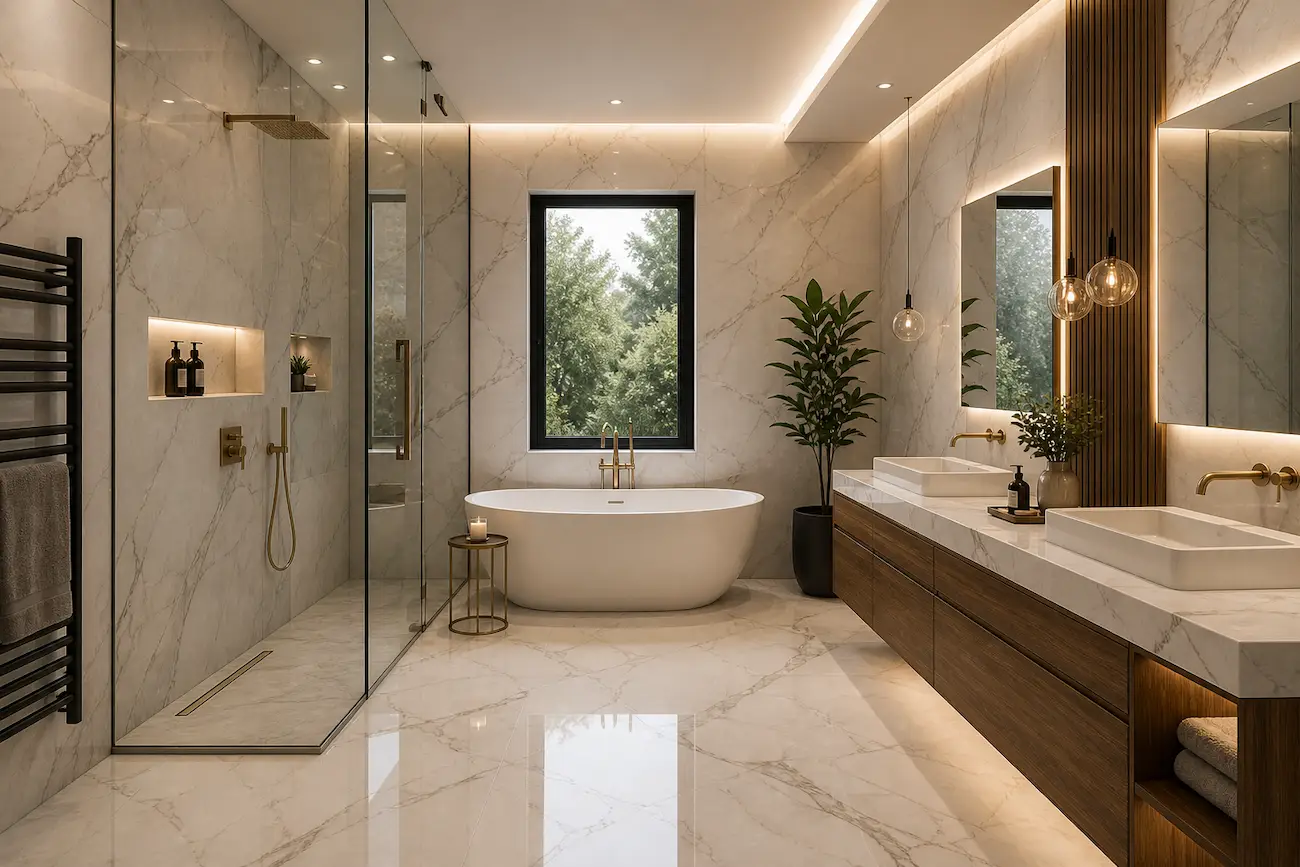
This guide isn’t about talking people out of luxury. It’s about showing how to achieve the same luxury look, with marble alternatives bathroom materials that actually make sense for wet spaces.
Why Carrara Marble Is “King”… and Why It Struggles in Bathrooms
Carrara marble has history behind it. Italian quarries, classic architecture, high-end hotels—it carries prestige. But bathrooms don’t care about prestige. Bathrooms care about moisture.
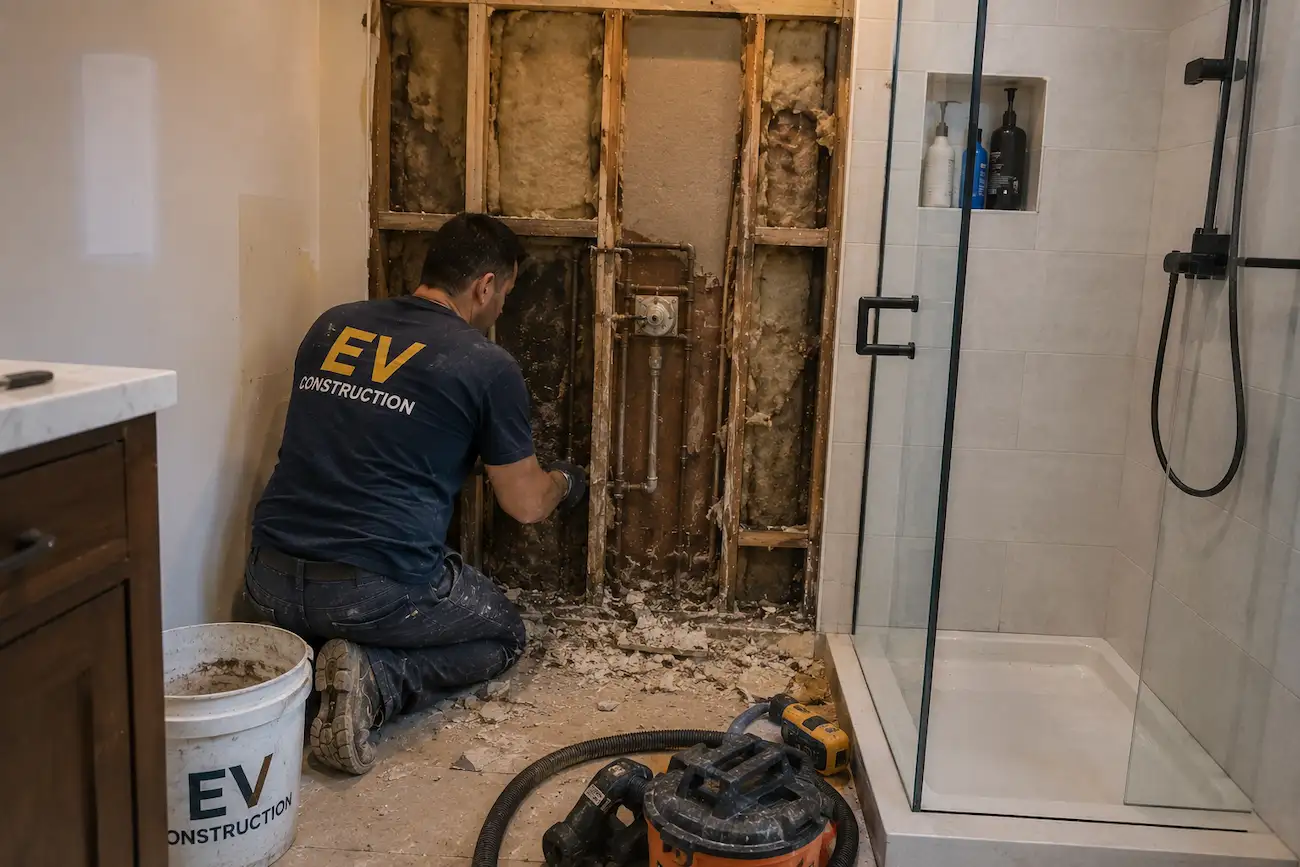
Marble is naturally porous. In a space with steam, splashes, soaps, shampoos, and daily traffic, that porosity becomes a problem fast.
What We See on Real Jobs
- Etching from normal bathroom cleaners
- Dark spots where water sits
- Sealer wearing off unevenly
- Homeowners surprised by how often maintenance is needed
I remember a primary bathroom reno we did near Yonge & 16th Avenue in Richmond Hill. Beautiful design, clean layout, lots of natural light. The client initially wanted real Carrara for the shower walls and vanity top.
We walked through the pros and cons, showed some modern alternatives, and they ended up choosing porcelain slabs instead. A year later, they told me it was the best decision they made—same look, zero maintenance stress.
That’s the difference between liking a material in theory and living with it daily.
According to guidelines from the Tile Council of North America, bathroom surfaces should be evaluated as part of a full moisture system—not just visual finishes.
Appearance vs. Performance: How Contractors Actually Choose Materials
When we spec materials for bathrooms, we always separate two questions:
- Does it look like Carrara marble?
- How does it behave long-term in moisture?
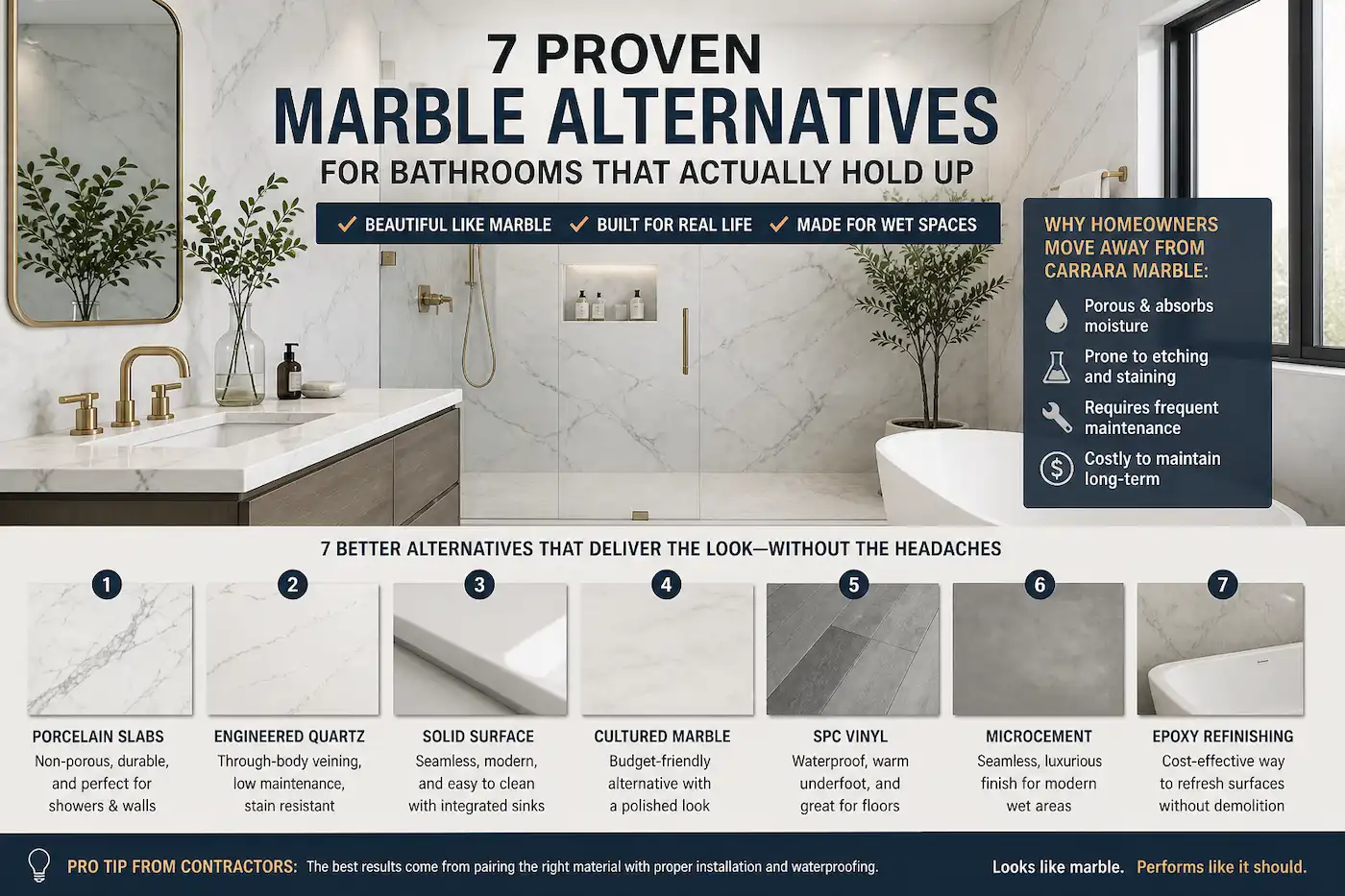
These days, you don’t have to compromise on looks to get performance. Below are seven materials we regularly use in bathroom renovations when clients want a Carrara-style aesthetic—without the headaches.
Comparison: Marble Alternatives at a Glance
| Material | Visual Match | Maintenance | Cost Level | Best Use |
|---|---|---|---|---|
| Porcelain Slabs | ★★★★★ | Very Low | Medium-High | Showers, feature walls |
| Quartz | ★★★★☆ | Low | Medium | Vanity tops |
| Solid Surface | ★★★☆☆ | Low | Medium | Modern bathrooms |
| Cultured Marble | ★★★☆☆ | Medium | Low-Medium | Budget renos |
| SPC Vinyl | ★★★☆☆ | Very Low | Low | Flooring |
| Microcement | ★★★★☆ | Low | Medium | Seamless showers |
| Epoxy Refinishing | ★★★☆☆ | Medium | Low | Quick upgrades |
1. High-Definition Porcelain Slabs
(The Closest Visual Match to Real Marble)
If I had to pick one material that checks the most boxes for bathrooms, it’s large-format porcelain slabs.
Today’s slabs use high-definition inkjet printing, which creates layered veining that doesn’t repeat in obvious patterns. From a normal viewing distance, most people assume it’s real marble.
Why It Works So Well in Bathrooms
- Completely non-porous
- No sealing required
- Handles heat, steam, and chemicals
- Large formats mean fewer grout lines
In custom showers and feature walls, porcelain slabs give you that luxury hotel look—without worrying about water damage or staining down the line.
Best For
- High-end showers and feature walls
- Homeowners who want zero maintenance
- Long-term renovations where durability matters
Avoid If
- You’re working with a tight budget
- You plan to DIY installation
2. Engineered Quartz with Through-Body Veining
(Ideal for Vanity Tops)
Quartz has evolved a lot. Older quartz slabs gave themselves away at the edges. Newer options include deeper veining that carries through the slab, making miters and edges look far more natural.
Best Uses in Bathrooms
- Vanity countertops
- Integrated backsplashes
- Clean, white bathroom designs
Quartz stays bright, resists moisture, and doesn’t require sealing—making it far better suited for everyday bathroom use than real marble.
Best For
- Vanity areas with heavy daily use
- Clean, low-maintenance designs
Avoid If
- You want a perfectly natural stone feel everywhere
- You’re planning full shower wall coverage
3. Solid Surface Materials
(The Seamless Option)
Solid surface doesn’t try to copy marble vein-for-vein. Instead, it delivers a smooth, calm, stone-inspired look.
Why We Use It
- Seamless joints
- Integrated sinks with no caulking seams
- Easy to renew if damaged
For modern or minimalist bathrooms, this material creates a clean, spa-like feel that holds up extremely well.
Best For
- Modern or minimalist bathrooms
- Homeowners who want a seamless look
Avoid If
- You want strong marble veining visuals
4. Honed Cultured Marble
(A Much Better Version Than Before)
Cultured marble has a reputation—and honestly, not always a good one. But newer versions with honed or matte finishes look far more refined. The shine is gone, and the surface feels closer to real stone.
Where It Makes Sense
- Vanity tops
- Tub surrounds
- Budget-controlled renovations
It’s not a premium luxury material—but used correctly, it delivers good value and durability.
In terms of durability, it holds up well for standard residential use, especially in low to mid-traffic bathrooms. It’s also relatively easy to clean with non-abrasive cleaners, though it can be more prone to surface wear over time compared to porcelain or quartz.
We typically recommend it for budget-conscious renovations where visual consistency matters more than long-term surface hardness.
Best For
- Budget-friendly renovations
- Secondary bathrooms
Avoid If
- You want premium durability long-term
5. Luxury Vinyl Tile (SPC) with Marble Look
(Comfortable Bathroom Flooring)
For secondary bathrooms or basements, SPC luxury vinyl tile is a practical solution.
Why Homeowners Like It
- Waterproof core
- Warmer underfoot than tile
- Faster installation
- Convincing visuals from standing height
It won’t replace stone in a high-end ensuite—but it’s a smart option where comfort and budget matter.
It has a waterproof core and performs well in humid environments, making it suitable for basements or secondary bathrooms. Maintenance is simple—regular sweeping and occasional damp mopping is usually enough.
While it doesn’t offer the same long-term durability as tile or stone, it’s a solid choice for homeowners looking for a fast, budget-friendly upgrade.
Best For
- Basements and secondary bathrooms
- Quick renovations
Avoid If
- You want a high-end luxury finish
6. Microcement / Venetian Plaster Over Existing Surfaces

(Seamless and Modern)
Microcement allows us to skim over existing tile and create a continuous surface with minimal joints. In bathrooms, fewer joints mean less opportunity for mold and grime to build up.
This finish works especially well in contemporary designs and custom showers.
When properly installed and sealed, it performs well in wet areas and is relatively easy to maintain. Cleaning typically involves mild, pH-neutral products to preserve the finish.
Moisture control principles outlined by CMHC highlight how critical proper sealing and installation are in wet environments.
However, installation quality is critical—this is not a DIY-friendly material. We only recommend it when applied by experienced professionals to avoid cracking or uneven finishes over time.
Best For
- Modern seamless designs
- Custom showers
Avoid If
- You don’t have access to experienced installers
7. Epoxy Stone Refinishing

(The Zero-Demo Upgrade)
When full demolition isn’t practical, epoxy refinishing can dramatically refresh old surfaces.
Is it permanent? No. Is it cost-effective for the right project? Absolutely.
We often recommend it for rentals or short-term upgrades.
It’s a cost-effective solution for short- to mid-term use, especially in rental properties or quick resale situations. Maintenance is straightforward, but the surface can scratch or wear down faster than permanent materials.
We usually position epoxy as a temporary upgrade rather than a long-term investment.
Best For
- Rental properties
- Temporary upgrades
Avoid If
- You want a permanent high-end solution
The Contractor Detail That Sells the Look
Grout Strategy
- Keep grout lines as tight as possible (1/16")
- Match grout colour closely to the surface
- Less grout = cleaner look + less mold risk
Lighting Matters
- Aim for 3000K–3500K LEDs
- Avoid overly yellow lighting
- Avoid harsh daylight tones
Good lighting makes marble-look surfaces feel deeper and more natural.
DIY vs. Pro: Be Honest About It
Some things can be DIY. Bathrooms, overall, are not forgiving.
Some parts of a bathroom project can be handled yourself, but core installation decisions often determine long-term performance. If you're planning a full upgrade, reviewing real bathroom renovation projects in your area can help set expectations.
DIY-Friendly
- SPC vinyl flooring
- Epoxy refinishing
Hire a Pro For
- Large-format porcelain
- Waterproofing systems
- Microcement applications
In bathrooms, mistakes don’t show up immediately—but when they do, they’re expensive.
Decision Guide: Which Material Should You Choose?
- If you want the closest look to real marble with no maintenance → Porcelain slabs
- If your focus is vanity durability → Quartz
- If you want a seamless modern look → Solid surface or microcement
- If you're working with a tighter budget → Cultured marble or SPC
- If you're upgrading short-term → Epoxy refinishing
Final Thoughts
Luxury isn’t about using the most expensive material. It’s about choosing materials that look great and perform well over time.
We’ve applied these principles on bathroom renovations across Richmond Hill and Vaughan, and the feedback is always the same: It still looks new.
Whether you're planning a renovation locally or comparing finishes, looking at real examples—from projects like those in recent Vaughan bathroom upgrades to detailed breakdowns in guides like this tile selection resource—can help you make smarter decisions.
Using the right marble alternatives bathroom materials is what keeps a space looking new years after completion.
Planning a Bathroom Renovation? If you’re considering a bathroom renovation and want help choosing materials that balance luxury, durability, and budget, talk to us.
If you're still deciding between materials, it's worth looking at how they actually perform in real projects—not just how they look on samples or showroom boards.
We’ve worked on bathroom renovations across Richmond Hill, Vaughan, and surrounding areas, and the difference between a material that looks good on day one and one that still looks good a year later is usually in these exact decisions.
Frequently Asked Questions
Is porcelain really better than marble in bathrooms?
In wet areas, yes. Porcelain is non-porous, doesn’t need sealing, and handles moisture far better while still offering a marble-like appearance.
Can these marble alternatives increase home value?
Absolutely. Clean, durable finishes with timeless design appeal often outperform high-maintenance materials when it comes to resale value.
Which option is best for shower walls?
Large-format porcelain slabs or properly installed microcement are the most durable and low-maintenance options.
Does quartz work in humid bathrooms?
Yes. Quartz is non-porous and performs very well on vanity tops in humid environments.
Can I achieve the Carrara look on a budget?
Yes. Porcelain, cultured marble, and even SPC flooring can deliver a similar visual at different price points—with less maintenance.