If you spend enough years renovating bathrooms across Toronto, you start to notice which upgrades truly improve daily life and which ones just sound impressive in a showroom. Bathroom lighting automation is one of the few features that consistently delivers comfort, safety, and practical long-term value. It is not just about adding technology for the sake of it. Done properly, it makes the room feel easier to use first thing in the morning, safer at night, and more polished overall.
What used to feel like a luxury feature in places like Forest Hill or Lawrence Park now comes up in conversations across East York, Danforth Village, North York condos, Midtown family homes, and older semis in the Beaches. Homeowners want bathrooms that feel intuitive and well planned. They want softer light at night, better visibility during early winter mornings, and fixtures that work with the way real people move through a space every day.
The key is that good bathroom lighting automation should never make the room feel like a gadget experiment. It should feel natural. It should support routines, improve safety, and fit into the renovation as seamlessly as the tile, vanity, and waterproofing. That is what separates a smart upgrade from a gimmick.
Why Bathroom Lighting Automation Matters in Real Homes
Most homeowners do not begin by saying they want automation. They begin with a problem. A family wants a softer lighting setup for nighttime bathroom trips with children. A couple wants the room to feel calm and layered instead of harsh and flat. A condo owner wants a brighter bathroom without overcrowding the ceiling with more fixtures. Someone renovating an older home wants better visibility and better safety at night without reaching for a blinding switch.
That is where lighting automation makes sense. It solves real-life problems quietly. Instead of treating the bathroom like a basic utility room, it helps the space respond better to how it is actually used. In a city like Toronto, where winter mornings are dark and daylight can feel limited for months, that difference becomes noticeable very quickly.
In many renovations, lighting is still treated as something to choose near the end. From a contractor’s perspective, that is backwards. If you want a bathroom to feel high-end, safe, and genuinely comfortable, the lighting plan needs to be part of the design conversation from the beginning, not something added after tile selections are already locked in.
How Bathroom Lighting Automation Works Without Feeling Overdone
The best systems are usually the least obvious. Motion-activated toe-kick lighting can guide someone into the room at night without shocking their eyes. Vanity lighting can be dimmed for late evening routines and brightened for mornings when clearer task lighting matters. Some homeowners choose humidity-linked controls so accent lighting and ventilation work together more smoothly after showers. Others prefer voice-enabled dimmers, especially in ensuites where convenience matters.
The point is not to automate every single switch. The point is to make the bathroom easier to use. A well-designed setup usually includes a few carefully chosen lighting layers that respond to specific needs: path lighting, mirror lighting, shower lighting, and ambient accent lighting. When these layers are planned properly, the bathroom feels more polished and more expensive without necessarily looking flashy.
Popular Bathroom Lighting Automation Features We Use in Toronto Renovations
Motion-Activated Night Lighting
This is one of the most useful features for families, guest bathrooms, and ensuites. Low-level lighting under a vanity or along a toe-kick can activate automatically during nighttime use. It reduces the need for bright overhead light and lowers the chance of trips or disorientation.
Programmable Lighting Scenes
Instead of one switch controlling the whole room, scenes allow the bathroom to respond differently depending on the time of day. A “morning” scene can brighten vanity lighting for grooming, while an “evening” scene can soften the room for a calmer atmosphere.
Dimmable Vanity and Mirror Lighting
Vanity lighting is often where people notice the biggest quality difference. Fixed lighting can feel either too harsh or too weak. Dimming gives the room flexibility and makes the bathroom feel more custom.
Accent LED Lighting
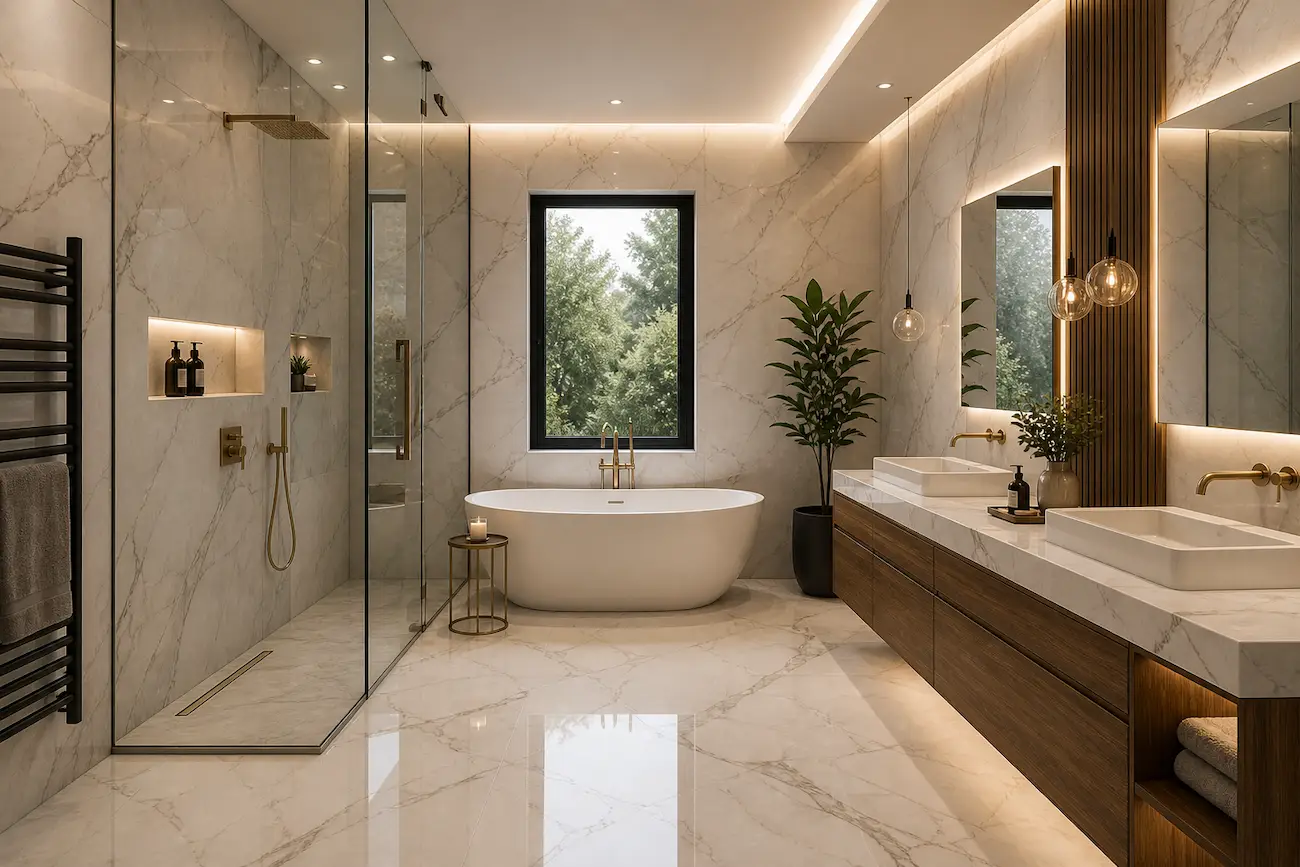
LED strip lighting can be integrated under vanities, inside niches, behind mirrors, or beneath floating features. It adds depth and helps the bathroom feel layered rather than flat. This works especially well when the rest of the renovation already includes upgraded finishes, thoughtful fixture selection, and a strong visual plan. In fact, when homeowners start thinking through lighting, it often makes sense to look at fixtures more holistically because the overall result depends on how the vanity lights, mirror lights, faucet finishes, and hardware all work together, which is exactly why our bathroom fixtures technology guide is often part of the conversation during planning.
Why Planning Early Matters More Than Most Homeowners Expect
Smart bathroom lighting only works well when it is coordinated early. Once waterproofing, tile layout, niche placement, mirror sizing, and vanity dimensions are set, your options become narrower. Reworking lighting late in the process usually costs more and produces weaker results.
During planning, we think through where drivers, transformers, switches, dimmers, sensors, and access points will go. We also consider sightlines, reflections in mirrors, glass placement, ceiling depth, and how lighting interacts with tile joints and cabinetry. These details are what make the final result feel intentional rather than improvised.
This is also where renovation budgeting needs to stay realistic. Homeowners sometimes assume lighting automation is a small add-on, but once you combine controls, finish coordination, electrical work, and integration with the rest of the bathroom scope, it needs to be treated as part of the renovation plan. That is one reason accurate budgeting matters so much, especially in the GTA where material, labour, and code-related costs can move quickly. If you are trying to map out the bigger picture before finalizing your design, our bathroom renovation cost in Toronto guide helps put those upgrade decisions into context.
Toronto Renovation Challenges Behind the Walls
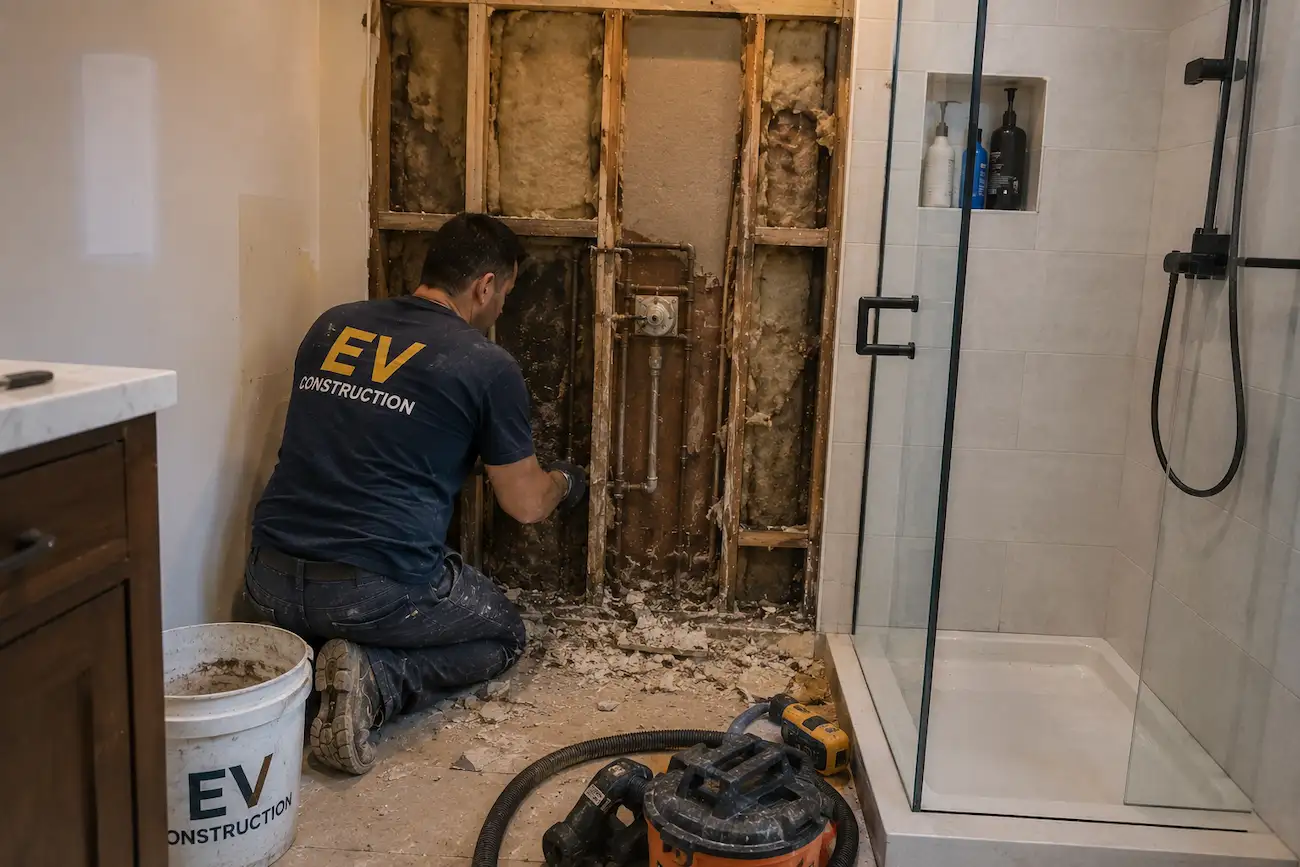
This is the part most homeowners never see. Installing automated lighting in a Toronto bathroom can be straightforward in one project and surprisingly complex in the next. In older homes, once walls are opened, we often find outdated wiring, shallow ceiling cavities, awkward framing, limited access, or older plumbing layouts that compete for space. Those conditions affect what can actually be installed and how cleanly it can be done.
On one project in a west-end home, the client wanted recessed linear lighting near the shower, but the ceiling cavity was extremely tight. That meant coordinating the lighting plan with electrical, waterproofing, framing, and ventilation so the detail worked without creating future moisture or service issues. On another project near the Beaches, opening a wall for what looked like a simple sensor upgrade revealed older wiring that had to be corrected before we could proceed properly.
This is why bathroom automation should never be treated like a last-minute accessory. It has to be designed around the realities of the structure. And when renovation work affects permits, interior alterations, plumbing, or electrical scope, homeowners should understand the official requirements as well. The City of Toronto’s Interior Alterations permit guidance is a useful starting point for that side of the process.
What Bathroom Lighting Automation Costs in Toronto
In a full bathroom renovation, adding lighting automation commonly adds somewhere around $800 to $2,500 to the budget, though premium systems or more custom integration can push that higher. The final number depends on how many lighting zones are involved, what level of automation is being installed, whether wiring upgrades are needed, and how easily the system can be integrated into the existing structure.
| Upgrade Type | Typical Scope | Estimated Range |
|---|---|---|
| Basic Smart Upgrade | Smart dimmer or switch, limited programming | $800 – $1,200 |
| Mid-Range Automation | Motion lighting, dimmers, vanity integration | $1,200 – $2,000 |
| Custom Integrated Setup | Multiple zones, LED accents, sensor-based scenes | $2,000 – $2,500+ |
The age of the home matters a lot. In older areas of Toronto and East York, electrical upgrades can become part of the scope very quickly. In condos, access, board rules, and limits around modifications can affect costs as well. What looks simple on paper is not always simple on site.
How Lighting Automation Adds Real Value to a Bathroom
The value is not only in resale, although that matters. The bigger value is how the bathroom feels every day. Automated lighting makes a space feel more refined, more comfortable, and more intentional. Soft toe-kick lighting, well-balanced mirror lighting, and properly designed dimming all signal that the renovation was thought through carefully.
In higher-end neighbourhoods, buyers may see it as part of a broader smart-home standard. In practical family homes, it often reads as comfort and quality rather than luxury. Either way, it makes the bathroom stand out because the space feels finished at a higher level. It is one of those upgrades people may not have asked for initially, but once they live with it, they tend to see it as a real improvement instead of a novelty.
Best Practices Before Starting a Bathroom Lighting Automation Project
Choose Products for Humid Environments
Bathrooms are wet, warm, and demanding spaces. Cheap LED products or poor-quality components often fail early, discolor over time, or perform inconsistently in humid conditions. Product quality matters more here than it does in many other rooms.
Think Carefully About Sensor Placement
Sensor location is one of the biggest make-or-break details. If placed badly, sensors trigger too often or not when needed. The bathroom should respond to use, not to someone simply passing the doorway.
Coordinate Lighting With Tile, Glass, and Millwork
Lighting should be coordinated with shower glass lines, mirror dimensions, tile layout, and vanity construction. This avoids awkward cut lines, visible components, and lighting that feels disconnected from the design.
Do Not Ignore Electrical Compliance
If new electrical wiring, devices, or related upgrades are part of the renovation, the work should follow Ontario requirements properly. The Electrical Safety Authority’s page on Notifications and Inspections is a solid official reference for homeowners trying to understand that side of the project.
Real Examples From Toronto Bathroom Projects
Forest Hill Ensuite
In one ensuite renovation, low-level night lighting was installed to create a boutique-hotel feel without disturbing sleep. The result was subtle, practical, and one of the first features the homeowner mentioned after moving back into the space.
Downtown Condo Bathroom
In a windowless condo bathroom, automated dimming and layered vanity lighting made the room feel brighter and more natural without crowding the ceiling with extra fixtures.
Danforth Village Rental Upgrade
In a rental-oriented renovation, improved lighting details helped the bathroom feel far more premium than the original build. Small touches like integrated vanity lighting and a more refined night-use setup made the unit present better overall and supported the owner’s goal of creating a stronger impression for future tenants.
FAQ About Bathroom Lighting Automation in Toronto
1. Is bathroom lighting automation worth it in a standard family home?
Yes, in many cases it is. The biggest benefit is not showing off smart features. It is improving day-to-day use. Motion-based night lighting, dimmable vanity lighting, and better layered light make the bathroom safer, more comfortable, and easier to use for everyone in the home.
2. Can smart lighting be added to an existing bathroom without a full renovation?
It can, but the options are usually more limited. In retrofit situations, smart switches, dimmers, or surface-mounted lighting details are often the most practical path. A full renovation gives much more flexibility because wiring, access, and fixture placement can be planned properly from the start.
3. What type of automated lighting works best for nighttime bathroom use?
Low-level motion-activated lighting is usually the most effective. Toe-kick lighting, under-vanity lighting, or other soft path lighting options help people move through the room safely without turning on bright overhead fixtures.
4. Does bathroom lighting automation require special electrical planning?
Very often, yes. Once you introduce sensors, dimmers, integrated LED lighting, or multiple scenes, the electrical plan becomes more important. In older Toronto homes, existing wiring conditions can also affect what is possible and what should be upgraded during the renovation.
5. Which matters more: smart controls or good design?
Good design matters first. Smart controls only work well when the lighting layout itself is already strong. If the vanity lighting is poor, the shower lighting is harsh, or the layers are not planned properly, automation will not fix the underlying design problem. The best results come from pairing smart controls with a well-designed bathroom from the beginning.
Planning a Bathroom Renovation in Toronto or the GTA?
Lighting is one of those details that changes how the whole room feels. When it is planned properly, your bathroom works better in the morning, feels safer at night, and looks more complete every day. If you are renovating and want the space to feel smarter, more comfortable, and built with real-life use in mind, we can help you plan it the right way from the start.
Honest advice, practical planning, and renovation solutions that fit the way Toronto homes actually work.